
Apple Mac Support Net
Ανεξάρτητη Τεχνική Υποστήριξη και Service για τα Apple
Mac
7 Ημέρες την Εβδομάδα
10:00-20:00 > 6932 46 96
56
-


-
Αγορά Πληροφορικής
Αγορά Τηλεπικοινωνιών
Adobe
AirPort
Amazon
AMD
Αναπαραγωγή Ήχου & Μουσικής
Αναπαραγωγή Video
Android
Αντίγραφα Ασφαλείας & Συγχρονισμός Δεδομένων
Αντιμετώπιση Ψηφιακών Ιών (Antivirus)
Aperture
Απόψεις & Γνώμες
Apple
Apple App Store
Apple Events
Apple Exchange and Repair Extension Programs
Apple Keynote
Apple PencilApple QmasterApple Remote Desktop
Apple Stores
Apple TV
Apple VS Microsoft
Apple Watch
Αρχειοθέτηση & Βάσεις Δεδομένων
Ασύρματα & Ενσύρματα Δίκτυα
Αστρονομία
Asus
Backup
Bill Gates
Blackberry
Boot Camp
Brother
Γονική Μέριμνα & Γονική Επίβλεψη
Γραφικές Τέχνες
Canon
Cinema Display
Cinema ToolsColorCompressor
Computer Virus
CosmoteCSS
Διαδίκτυο (Internet)
Διασκέδαση & Ψυχαγωγία (Fun)
Διαφημίσεις
Διαχείριση Διακομιστών (Servers Administration)
Δικαιώματα Καταναλωτών
Δωρεάν Λογισμικό (Freeware)
DSL
DVD Studio ProeBayΕγγύηση/Εγγυήσεις Προϊόντων
EFI Updates
Εκπαιδευτικό Λογισμικό
Εκτυπώσεις
Ελληνική Νομοθεσία
Επεξεργασία Κειμένου & Ηλεκτρονική Σελιδοποίηση
Εργαλεία Συστήματος (System Tools)
Έρευνα & Ανάπτυξη
Epson
Ευρωπαϊκή Ένωση
Ευρωπαϊκή Νομοθεσία
Facebook
Final Cut Express
Final Cut Pro
Final Cut ServerFinal Cut StudioFireWire 400FireWire 800Firmware Updates
Fujifilm
Fusion DriveHacktivism
Ηλεκτρονικές Συναλλαγές
Θετικές Επιστήμες
Garage BandGestetner
Google
Hacking
Hewlett Packard
Hitachi
HTML
HTML5
Ιατρική & Φαρμακολογία
IBM
iBook
iCloud
iDVDiLife
iMac
iMac ProiMac Retina Display
iMovie
Intel
Intel Core 2 DuoIntel Core i3Intel Core i5Intel Core i7Intel XeoniOS 12iOS 11iOS 10iOS 9iOS 8
iOS 7
iOS 6
iOS 5
iOS 4
iOS 3
iOS 2
iOS 1
iOS
iPad Air
iPad Air 2
iPad Mini
iPad Mini 2iPad Mini 3
iPad Mini 4iPad Mini Retina Display
iPad New
iPad ProiPad Retina Display
iPad Retina Display New
iPad 2
iPad
iPhone XiPhone 8 PlusiPhone 8iPhone 7 PlusiPhone 7iPhone SEiPhone 6s PlusiPhone 6siPhone 6 Plus
iPhone 6
iPhone 5s
iPhone 5c
iPhone 5
iPhone 4S
iPhone 4
iPhone 3GS
iPhone 3G
iPhone 2G
iPhone
iPhoto
iPod
iPod Classic
iPod Nano
iPod Shuffle
iPod Touch
iTunes
iWebiWork
Java
JavaScript
Keynote
Κινητή Τηλεφωνιά
Κοινωνικά Δίκτυα (Social Networks)
Λειτουργικά Συστήματα
Lexmark
LinkedIn
Linux
LiveTypeLogic
Λογισμικό (Software)
Λογισμικό Mac (Mac Software)
Mac
Mac Mini
macOS Mojave 10.14macOS High Sierra 10.13
macOS Sierra 10.12
macOS
macOS ServerMac OS X El Capitan 10.11
Mac OS X Yosemite 10.10
Mac OS X Yosemite Server 10.10
Mac OS X Mavericks 10.9
Mac OS X Mavericks Server 10.9
Mac OS X Mountain Lion 10.8
Mac OS X Mountain Lion Server 10.8
Mac OS X Lion 10.7
Mac OS X Lion Server 10.7
Mac OS X Snow Leopard 10.6
Mac OS X Snow Leopard Server 10.6
Mac OS X Leopard 10.5
Mac OS X Leopard Server 10.5
Mac OS X Tiger 10.4
Mac OS X Tiger Server 10.4
Mac OS X Panther 10.3
Mac OS X Panther Server 10.3
Mac OS X Jaguar 10.2Mac OS X Jaguar Server 10.2Mac OS X Puma 10.1Mac OS X Puma Server 10.1Mac OS X Cheetah 10.0Mac OS X Cheetah Server 10.0Mac OS X
Mac OS X Server
Mac OS 9
Mac OS 8Mac OS 7Mac OS 6Mac Pro
Mac Support Net
Mac VS Linux
Mac VS Windows
MacBook
MacBook Air
MacBook Pro
MacBook Pro Retina Display
Μετεωρολογία & Πρόγνωση Καιρού
Microsoft
Microsoft Office
Microsoft Windows 8
Microsoft Windows 7
Microsoft Windows Vista
Microsoft Windows XP
Microsoft Windows Mobile
Microsoft Windows Server
Microsoft Windows
Motion
MP3
Νέα Προϊόντα Apple
Νέα Προϊόντα Πληροφορικής
Νέες Τεχνολογίες
Nikon
Νομικά Θέματα
Numbers
Οικολογία
Οικονομία & Λογιστική
Online Applications
Online Games
Οργάνωση & Διαχείριση Πληροφοριών
Οργάνωση & Διαχείριση Χρόνου
Pages
Παιχνίδια Mac (Mac Games)
Παιχνίδια Δράσης (Arcade)
Παιχνίδια Ρόλων (Role Playing)
Παιχνίδια Εξομοίωσης (Simulation)
Παιχνίδια Επιτραπέζια (Board)
Παιχνίδια Καταστροφής (Shoot 'Em Up)
Παιχνίδια Μηχανοκίνητων Αγώνων (Racing)
Παιχνίδια Περιπέτειας (Adventure)
Παιχνίδια Πολέμου (War Games)
Παιχνίδια Στρατηγικής (Strategy)
Παραγωγή & Επεξεργασία Γραφικών
Παραγωγή & Επεξεργασία Εικόνας
Παραγωγή & Επεξεργασία Ήχου
Παραγωγή & Επεξεργασία Ιστοσελίδων
Παραγωγή & Επεξεργασία Μουσικής
Παραγωγή & Επεξεργασία Παρουσιάσεων
Παραγωγή & Επεξεργασία Σχεδίου
Παραγωγή & Επεξεργασία Τρισδιάστατου Σχεδίου 3D-CAD
Παραγωγή & Επεξεργασία Τρισδιάστατων Γραφικών 3D-CAD
Παραγωγή & Επεξεργασία Φωτογραφίας
Παραγωγή & Επεξεργασία Video
Πολυμέσα (Multimedia)
Προγραμματισμός & Ανάπτυξη Λογισμικού
Προσωπικά Δεδομένα
Πρόταση Αγοράς
Πρόταση Δοκιμής
Panasonic
PayPal
Peer To Peer File Sharing (P2P)
Pentax
PlayStation
PowerBook
Quicktime
Σκληροί Δίσκοι
Σκληροί Δίσκοι > SSD
Σκληροί Δίσκοι > ΥβριδικοίSafari
Samsung
SanDisk
Seagate
SEO - Search Engine Optimization
Servers
ShakeSMC Update
Sony
Soundtrack ProSteve Jobs
TDK
Τεχνική Υποστήριξη Apple Mac
Τεχνική Υποστήριξη Mac
Τεχνολογίες Cloud
Tim Cook
Time Capsule
Time Capsule Alternative
Time Machine
Time Machine Server Pro
Thunderbolt
Torrents
Toshiba
Twitter
Υλικό (Hardware)
YouTube
Υποστήριξη Mac
Υποστήριξη Πελατών Apple
Υποστήριξη Χρηστών Mac
Υποστήριξη Apple Mac > Βοήθεια (Tips & Tricks)
Υποστήριξη Apple Mac > Επίλυση Προβλημάτων
Υποστήριξη Apple Mac > Mac OS Updates - Αναβαθμίσεις Λειτουργικού Συστήματος
Υποστήριξη Apple Mac > Software Updates - Αναβαθμίσεις Λογισμικού
Υποστήριξη Apple Mac > Τεχνικές Συμβουλές
Υποστήριξη Apple Mac > Τεχνική Βοήθεια
Υποστήριξη Mojave 10.14Υποστήριξη High Sierra 10.13Υποστήριξη Sierra 10.12Υποστήριξη macOS ServerΥποστήριξη El Capitan 10.11Υποστήριξη El Capitan Server 10.11Υποστήριξη Yosemite 10.10
Υποστήριξη Yosemite Server 10.10
Υποστήριξη Mavericks 10.9
Υποστήριξη Mavericks Server 10.9
Υποστήριξη Mountain Lion 10.8
Υποστήριξη Mountain Lion Server 10.8
Υποστήριξη Lion 10.7
Υποστήριξη Lion Server 10.7
Υποστήριξη Snow Leopard 10.6
Υποστήριξη Snow Leopard Server 10.6
Υποστήριξη Leopard 10.5
Υποστήριξη Leopard Server 10.5
Υποστήριξη Tiger 10.4Υποστήριξη Tiger Server 10.4Υποστήριξη Panther 10.3Υποστήριξη Panther Server 10.3Υποστήριξη Jaguar 10.2Υποστήριξη Jaguar Server 10.2Υποστήριξη Puma 10.1Υποστήριξη Puma Server 10.1Υποστήριξη Cheetah 10.0Υποστήριξη Cheetah Server 10.0Υποστήριξη Mac OS X
Υποστήριξη Mac OS X Server
Υποστήριξη Mac OS 9Υποστήριξη Mac OS 8Υποστήριξη Mac OS 7Υποστήριξη Mac OS 6Φανατικοί Χρήστες Προϊόντων Apple
Ψηφιακή Ασφάλεια
Unix
USB
USB 2.0USB 3.0
VDSL
Vodafone
VoIP
VPN
WebObjectsWestern Digital
WINDWi-Fi
X11
Xerox
XsanΙαν 2015
Δεκ 2014
Νοε 2014
Οκτ 2014
Ιουλ 2014
Μαϊ 2014
Απρ 2014
Μαρ 2014
Φεβ 2014
Ιαν 2014
Νοε 2013
Οκτ 2013
Ιουν 2013
Φεβ 2013
Ιαν 2013
Δεκ 2012
Νοε 2012
Οκτ 2012
Σεπ 2012
Ιουλ 2012
Ιουν 2012
Μαϊ 2012
Απρ 2012
Μαρ 2012
Φεβ 2012
Ιαν 2012
Δεκ 2011
Νοε 2011
Οκτ 2011
Σεπ 2011
Αυγ 2011
Ιουλ 2011
Ιουν 2011
Μαϊ 2011
Απρ 2011
Μαρ 2011
Φεβ 2011
Ιαν 2011
Δεκ 2010
Νοε 2010
Οκτ 2010
Σεπ 2010
Steve Jobs' virtual DNA to be fostered in Apple University
01 Νοεμβρίου 2011 12:07 :: Apple | Steve Jobs
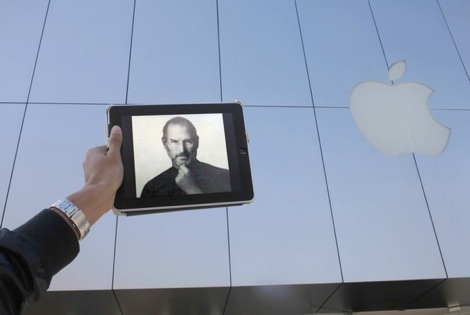
To survive its late founder, Apple and Steve Jobs planned a training program in which company executives will be taught to think like him, in 'a forum to impart that DNA to future generations.' Key to this effort is Joel Podolny, former Yale Business School dean.
Reporting from San Francisco— Apple Inc. now has to get down to the business of surviving its founder.
It's something that Apple — and Steve Jobs himself — had been painstakingly planning for years.
Deep inside its sprawling Cupertino, Calif., campus, one of the world's most successful and secretive companies has had a team of experts hard at work on a closely guarded project.
But it isn't a cool new gadget. It's an executive training program called Apple University that Jobs considered vital to the company's future: Teaching Apple executives to think like him.
"Steve was looking to his legacy. The idea was to take what is unique about Apple and create a forum that can impart that DNA to future generations of Apple employees," said a former Apple executive who spoke on the condition of anonymity to preserve his relationship with the company. "No other company has a university charged with probing so deeply into the roots of what makes the company so successful."
Jobs oversaw the most remarkable corporate turnaround in Silicon Valley history after returning to Apple in 1997. For more than a decade, he was behind every crucial decision as Apple rolled out blockbuster hits from the iPod to the iPad, changing how people listen to music and watch entertainment, reshaping entire industries and making Apple the world's most valuable tech company.
The challenge of maintaining that momentum came into sharp focus Tuesday when Apple's newly minted chief executive Tim Cook took Jobs' place on stage to show off an updated version of the world's best-selling smart phone. Without its master pitchman, Apple didn't get the kind of adulation for the iPhone's new features to which it's accustomed.
Apple would not comment on Apple University. But people familiar with the project say Jobs personally recruited the dean of Yale's Business School in 2008 to run it. Joel Podolny's assignment: Help Apple internalize the thoughts of its visionary founder to prepare for the day when he's not around anymore.
"One of the things that Steve Jobs understood very well is that Apple is like no other company on the planet," said longtime Apple analyst Tim Bajarin. "It became pretty clear that Apple needed a set of educational materials so that Apple employees could learn to think and make decisions as if they were Steve Jobs."
Podolny tasked leading business professors including Harvard University's Richard Tedlow, who wrote a biography of former Intel chief Andy Grove with researching the company's major decisions and the top executives who make them. Those executives — including Cook — have used those case studies to teach courses that groom the company's next generation of leaders.
Analysts say Jobs drew inspiration for the university from Bill Hewlett and David Packard, whose greatest creation was not the pocket calculator or the minicomputer, but Hewlett-Packard itself. Hewlett and Packard famously set out their company's core values in "The HP Way."
With Apple University, Jobs was trying to achieve something similar, people familiar with the project say. He identified tenets that he believes unleash innovation and sustain success at Apple — accountability, attention to detail, perfectionism, simplicity, secrecy. And he oversaw the creation of university-caliber courses that demonstrate how those principles translate into business strategies and operating practices.
The idea of building an ivory tower on a corporate campus goes back decades with the best-known — and oldest — run by General Electric. Corporate universities fell out of favor in the 1990s, considered too expensive, bureaucratic and out of touch with the companies they were supposed to serve. Even Apple shut down its corporate university.
But Jobs' interest in a corporate university never wavered, former employees say. For years he pressed for a way to study the success of Apple's executive team as well as Apple's culture and history. His model was Pixar. The animation studio that Jobs sold to Disney for $7.5 billion in 2006 runs Pixar University, a professional development program that offers courses in fine arts and filmmaking as well as leadership and management to steep employees in the company's culture, history and values as well as its craft.
"He had the university concept at Pixar, and he believed in it," said a former Apple executive who also spoke on the condition of anonymity to preserve his relationship with the company.
What Jobs needed was someone to carry out his vision.
Apple began approaching Podolny and other academics about five years ago, according to people who were contacted. The project took on greater urgency in 2008 shortly before Jobs took his second medical leave from Apple.
Podolny, an accomplished scholar and administrator whose resume includes teaching at two of the nation's top business schools, Stanford and Harvard, is an economic sociologist who focuses on leadership and organizational behavior.
Podolny didn't just study leaders; he became one. In 2005, at the age of 39, he left Harvard for the Yale School of Management where he rethought how the faculty taught future MBAs to better prepare them for the business world. Yale scrapped its staid single-subject courses in marketing and accounting for more holistic, multidisciplinary programs that focused on "the employee," "the innovator" and "the state and society."
By all accounts, Podolny lifted the fortunes of the young business school. He was credited with helping applications rise 50% during his 3½-year tenure. He recruited top scholars, increasing the size of the faculty by 20%. And his prodigious efforts on the stump helped the school raise more than $170 million. He was also in the classroom more often than most deans and responded to every email, frequently by 4:30 a.m.
"I remember scratching my head and thinking, 'This guy is not going to last at this rate.' Sure enough, he left sooner than we had hoped," Yale business professor Doug Rae said.
In October 2008, Podolny was at the top of his academic game with many expecting he would go on to become a university president. He stunned colleagues by abruptly stepping down as dean in the middle of the term and officially joining Apple in early 2009.
"The timing surprised everyone. Deans are typically in these positions for significantly longer; a decade would not be an unusual term. He had gone to really put the Yale School of Management on a different trajectory and that takes time," said Garth Saloner, dean of Stanford's Business School.
But Podolny was someone who had flouted convention to work on the cutting edge of academia. "Joel is an innovator and very creative and he's always looking for new areas to apply that talent," Saloner said.
Like others Jobs has recruited over the years, observers say Podolny fell under Jobs' spell. Podolny said he decided to leave Yale for the chance to work with a modern-day Thomas Edison.
Podolny recalled writing his first computer program on an Apple II and pulling an all-nighter to watch his Laserwriter print his undergraduate thesis at the rate of seven minutes a page.
"While there are many great companies, I cannot think of one that has had as tremendous personal meaning for me as Apple," he wrote in a farewell note to Yale students.
The importance of his new position at Apple was apparent from the first day. Podolny moved into an office in between Jobs and Cook, he confided in former colleagues. And, in a testament to Jobs' faith in Podolny, he was later named vice president of human resources.
Columbia University social scientist Peter Bearman, who was Podolny's advisor for his thesis on the role of Juan Carlos I in helping Spain establish a parliamentary democracy, said Podolny pursued his career-long interest in leadership at Apple.
"The idea that he was helping to build a structure for Apple into the future probably appealed to him," Bearman said.
jessica.guynn@latimes.com
Πηγή: LA Times

MacBook - MacBook Pro Retina Display - MacBook Air - PowerBook - iBook - Mac Pro - iMac - iMac Retina 5K Display - iMac Pro - Mac Mini - Xserve - Server - Power Mac - PowerBook - eMac - iPhone X - iPhone 8 Plus - iPhone 8 - iPhone 7Plus - iPhone 7 - iPhone SE - iPhone 6s Plus - iPhone 6s - iPhone 6 Plus - iPhone 6 - iPhone 5S - iPhone 5 - iPhone 4S - iPhone 3GS - iPhone 3G - iPad - iPad Mini - iPad Air - iPad Pro - 5G - 4G - 3G - WiFi - iPod - Apple Watch - Apple TV - Intel Core i7 - Intel Core i5 - Intel Core i3 - Intel Xeon - Intel Core 2 Duo - G5 - G4 - G3 - 12" - 13" - 14" - 15" - 17" - 20" - 21" - 24" - 27" - macOS Server - Mac OS X Server - Mojave 10.14 - High Sierra 10.13 - Sierra 10.12 - El Capitan 10.11 - Yosemite 10.10 - Mavericks 10.9 - Mountain Lion 10.8 - Lion 10.7 - Snow Leopard 10.6 - Leopard 10.5 - Tiger 10.4 - Panther 10.3 - Mac OS 9 - iOS - App Store - iTunes - iCloud - Facetime - iCal - iChat - iSync - Mail - Safari - Time Machine Backup - Quicktime - iLife - iPhoto - iMovie - iDVD - GarageBand - iWork - Pages - Keynote - Numbers - Final Cut Pro X - Final Cut Studio - Logic Pro - Aperture - LCD - Ram - Hard Disk - SSD - Hybrid - Fusion
This web site is not affiliated with Apple Inc.Αττική - Αθήνα - Θεσσαλονίκη - Πελλοπόνησος - Επτάνησα - Κυκλάδες - Δωδεκάνησα - Κρήτη
Apple Mac Support Net is not an Apple Authorised Service Provider. We provide Independent Technical Support and Service for Apple Mac Computers.
Apple, Mac, iPhone, iPad, iPod, Apple Logo and Mac Logo are registered trademarks of Apple Inc., registered in the U.S. and other countries.
All Copyrights, Logos, Trademarks and Intelectual Properties in this website are property of their respective owner.
All the rest ©2000- Apple Μac Support Net.