
Apple Mac Support Net
Ανεξάρτητη Τεχνική Υποστήριξη και Service για τα Apple
Mac
7 Ημέρες την Εβδομάδα
10:00-20:00 > 6932 46 96
56
-


-
Αγορά Πληροφορικής
Αγορά Τηλεπικοινωνιών
Adobe
AirPort
Amazon
AMD
Αναπαραγωγή Ήχου & Μουσικής
Αναπαραγωγή Video
Android
Αντίγραφα Ασφαλείας & Συγχρονισμός Δεδομένων
Αντιμετώπιση Ψηφιακών Ιών (Antivirus)
Aperture
Απόψεις & Γνώμες
Apple
Apple App Store
Apple Events
Apple Exchange and Repair Extension Programs
Apple Keynote
Apple PencilApple QmasterApple Remote Desktop
Apple Stores
Apple TV
Apple VS Microsoft
Apple Watch
Αρχειοθέτηση & Βάσεις Δεδομένων
Ασύρματα & Ενσύρματα Δίκτυα
Αστρονομία
Asus
Backup
Bill Gates
Blackberry
Boot Camp
Brother
Γονική Μέριμνα & Γονική Επίβλεψη
Γραφικές Τέχνες
Canon
Cinema Display
Cinema ToolsColorCompressor
Computer Virus
CosmoteCSS
Διαδίκτυο (Internet)
Διασκέδαση & Ψυχαγωγία (Fun)
Διαφημίσεις
Διαχείριση Διακομιστών (Servers Administration)
Δικαιώματα Καταναλωτών
Δωρεάν Λογισμικό (Freeware)
DSL
DVD Studio ProeBayΕγγύηση/Εγγυήσεις Προϊόντων
EFI Updates
Εκπαιδευτικό Λογισμικό
Εκτυπώσεις
Ελληνική Νομοθεσία
Επεξεργασία Κειμένου & Ηλεκτρονική Σελιδοποίηση
Εργαλεία Συστήματος (System Tools)
Έρευνα & Ανάπτυξη
Epson
Ευρωπαϊκή Ένωση
Ευρωπαϊκή Νομοθεσία
Facebook
Final Cut Express
Final Cut Pro
Final Cut ServerFinal Cut StudioFireWire 400FireWire 800Firmware Updates
Fujifilm
Fusion DriveHacktivism
Ηλεκτρονικές Συναλλαγές
Θετικές Επιστήμες
Garage BandGestetner
Google
Hacking
Hewlett Packard
Hitachi
HTML
HTML5
Ιατρική & Φαρμακολογία
IBM
iBook
iCloud
iDVDiLife
iMac
iMac ProiMac Retina Display
iMovie
Intel
Intel Core 2 DuoIntel Core i3Intel Core i5Intel Core i7Intel XeoniOS 12iOS 11iOS 10iOS 9iOS 8
iOS 7
iOS 6
iOS 5
iOS 4
iOS 3
iOS 2
iOS 1
iOS
iPad Air
iPad Air 2
iPad Mini
iPad Mini 2iPad Mini 3
iPad Mini 4iPad Mini Retina Display
iPad New
iPad ProiPad Retina Display
iPad Retina Display New
iPad 2
iPad
iPhone XiPhone 8 PlusiPhone 8iPhone 7 PlusiPhone 7iPhone SEiPhone 6s PlusiPhone 6siPhone 6 Plus
iPhone 6
iPhone 5s
iPhone 5c
iPhone 5
iPhone 4S
iPhone 4
iPhone 3GS
iPhone 3G
iPhone 2G
iPhone
iPhoto
iPod
iPod Classic
iPod Nano
iPod Shuffle
iPod Touch
iTunes
iWebiWork
Java
JavaScript
Keynote
Κινητή Τηλεφωνιά
Κοινωνικά Δίκτυα (Social Networks)
Λειτουργικά Συστήματα
Lexmark
LinkedIn
Linux
LiveTypeLogic
Λογισμικό (Software)
Λογισμικό Mac (Mac Software)
Mac
Mac Mini
macOS Mojave 10.14macOS High Sierra 10.13
macOS Sierra 10.12
macOS
macOS ServerMac OS X El Capitan 10.11
Mac OS X Yosemite 10.10
Mac OS X Yosemite Server 10.10
Mac OS X Mavericks 10.9
Mac OS X Mavericks Server 10.9
Mac OS X Mountain Lion 10.8
Mac OS X Mountain Lion Server 10.8
Mac OS X Lion 10.7
Mac OS X Lion Server 10.7
Mac OS X Snow Leopard 10.6
Mac OS X Snow Leopard Server 10.6
Mac OS X Leopard 10.5
Mac OS X Leopard Server 10.5
Mac OS X Tiger 10.4
Mac OS X Tiger Server 10.4
Mac OS X Panther 10.3
Mac OS X Panther Server 10.3
Mac OS X Jaguar 10.2Mac OS X Jaguar Server 10.2Mac OS X Puma 10.1Mac OS X Puma Server 10.1Mac OS X Cheetah 10.0Mac OS X Cheetah Server 10.0Mac OS X
Mac OS X Server
Mac OS 9
Mac OS 8Mac OS 7Mac OS 6Mac Pro
Mac Support Net
Mac VS Linux
Mac VS Windows
MacBook
MacBook Air
MacBook Pro
MacBook Pro Retina Display
Μετεωρολογία & Πρόγνωση Καιρού
Microsoft
Microsoft Office
Microsoft Windows 8
Microsoft Windows 7
Microsoft Windows Vista
Microsoft Windows XP
Microsoft Windows Mobile
Microsoft Windows Server
Microsoft Windows
Motion
MP3
Νέα Προϊόντα Apple
Νέα Προϊόντα Πληροφορικής
Νέες Τεχνολογίες
Nikon
Νομικά Θέματα
Numbers
Οικολογία
Οικονομία & Λογιστική
Online Applications
Online Games
Οργάνωση & Διαχείριση Πληροφοριών
Οργάνωση & Διαχείριση Χρόνου
Pages
Παιχνίδια Mac (Mac Games)
Παιχνίδια Δράσης (Arcade)
Παιχνίδια Ρόλων (Role Playing)
Παιχνίδια Εξομοίωσης (Simulation)
Παιχνίδια Επιτραπέζια (Board)
Παιχνίδια Καταστροφής (Shoot 'Em Up)
Παιχνίδια Μηχανοκίνητων Αγώνων (Racing)
Παιχνίδια Περιπέτειας (Adventure)
Παιχνίδια Πολέμου (War Games)
Παιχνίδια Στρατηγικής (Strategy)
Παραγωγή & Επεξεργασία Γραφικών
Παραγωγή & Επεξεργασία Εικόνας
Παραγωγή & Επεξεργασία Ήχου
Παραγωγή & Επεξεργασία Ιστοσελίδων
Παραγωγή & Επεξεργασία Μουσικής
Παραγωγή & Επεξεργασία Παρουσιάσεων
Παραγωγή & Επεξεργασία Σχεδίου
Παραγωγή & Επεξεργασία Τρισδιάστατου Σχεδίου 3D-CAD
Παραγωγή & Επεξεργασία Τρισδιάστατων Γραφικών 3D-CAD
Παραγωγή & Επεξεργασία Φωτογραφίας
Παραγωγή & Επεξεργασία Video
Πολυμέσα (Multimedia)
Προγραμματισμός & Ανάπτυξη Λογισμικού
Προσωπικά Δεδομένα
Πρόταση Αγοράς
Πρόταση Δοκιμής
Panasonic
PayPal
Peer To Peer File Sharing (P2P)
Pentax
PlayStation
PowerBook
Quicktime
Σκληροί Δίσκοι
Σκληροί Δίσκοι > SSD
Σκληροί Δίσκοι > ΥβριδικοίSafari
Samsung
SanDisk
Seagate
SEO - Search Engine Optimization
Servers
ShakeSMC Update
Sony
Soundtrack ProSteve Jobs
TDK
Τεχνική Υποστήριξη Apple Mac
Τεχνική Υποστήριξη Mac
Τεχνολογίες Cloud
Tim Cook
Time Capsule
Time Capsule Alternative
Time Machine
Time Machine Server Pro
Thunderbolt
Torrents
Toshiba
Twitter
Υλικό (Hardware)
YouTube
Υποστήριξη Mac
Υποστήριξη Πελατών Apple
Υποστήριξη Χρηστών Mac
Υποστήριξη Apple Mac > Βοήθεια (Tips & Tricks)
Υποστήριξη Apple Mac > Επίλυση Προβλημάτων
Υποστήριξη Apple Mac > Mac OS Updates - Αναβαθμίσεις Λειτουργικού Συστήματος
Υποστήριξη Apple Mac > Software Updates - Αναβαθμίσεις Λογισμικού
Υποστήριξη Apple Mac > Τεχνικές Συμβουλές
Υποστήριξη Apple Mac > Τεχνική Βοήθεια
Υποστήριξη Mojave 10.14Υποστήριξη High Sierra 10.13Υποστήριξη Sierra 10.12Υποστήριξη macOS ServerΥποστήριξη El Capitan 10.11Υποστήριξη El Capitan Server 10.11Υποστήριξη Yosemite 10.10
Υποστήριξη Yosemite Server 10.10
Υποστήριξη Mavericks 10.9
Υποστήριξη Mavericks Server 10.9
Υποστήριξη Mountain Lion 10.8
Υποστήριξη Mountain Lion Server 10.8
Υποστήριξη Lion 10.7
Υποστήριξη Lion Server 10.7
Υποστήριξη Snow Leopard 10.6
Υποστήριξη Snow Leopard Server 10.6
Υποστήριξη Leopard 10.5
Υποστήριξη Leopard Server 10.5
Υποστήριξη Tiger 10.4Υποστήριξη Tiger Server 10.4Υποστήριξη Panther 10.3Υποστήριξη Panther Server 10.3Υποστήριξη Jaguar 10.2Υποστήριξη Jaguar Server 10.2Υποστήριξη Puma 10.1Υποστήριξη Puma Server 10.1Υποστήριξη Cheetah 10.0Υποστήριξη Cheetah Server 10.0Υποστήριξη Mac OS X
Υποστήριξη Mac OS X Server
Υποστήριξη Mac OS 9Υποστήριξη Mac OS 8Υποστήριξη Mac OS 7Υποστήριξη Mac OS 6Φανατικοί Χρήστες Προϊόντων Apple
Ψηφιακή Ασφάλεια
Unix
USB
USB 2.0USB 3.0
VDSL
Vodafone
VoIP
VPN
WebObjectsWestern Digital
WINDWi-Fi
X11
Xerox
XsanΙαν 2015
Δεκ 2014
Νοε 2014
Οκτ 2014
Ιουλ 2014
Μαϊ 2014
Απρ 2014
Μαρ 2014
Φεβ 2014
Ιαν 2014
Νοε 2013
Οκτ 2013
Ιουν 2013
Φεβ 2013
Ιαν 2013
Δεκ 2012
Νοε 2012
Οκτ 2012
Σεπ 2012
Ιουλ 2012
Ιουν 2012
Μαϊ 2012
Απρ 2012
Μαρ 2012
Φεβ 2012
Ιαν 2012
Δεκ 2011
Νοε 2011
Οκτ 2011
Σεπ 2011
Αυγ 2011
Ιουλ 2011
Ιουν 2011
Μαϊ 2011
Απρ 2011
Μαρ 2011
Φεβ 2011
Ιαν 2011
Δεκ 2010
Νοε 2010
Οκτ 2010
Σεπ 2010
Σεπ 2012
Hitler Finds Out About Apple's new iOS 6 Maps!
28 Σεπτεμβρίου 2012 18:25 ::
Διασκέδαση & Ψυχαγωγία (Fun)
| Apple | iOS | iOS 6 | iPod Touch
| iPad | iPad 2
| iPad New
| iPhone 5
| iPhone 4S
| iPhone 4
| iPhone 3GS
| iPhone
Νέο σοβαρό κενό ασφαλείας στην Java θέτει σε κίνδυνο 1 δισεκατομμύριο υπολογιστές Mac και Windows PC!
27 Σεπτεμβρίου 2012 18:41 ::
Αγορά Πληροφορικής |
Αγορά Τηλεπικοινωνιών |
Ψηφιακή Ασφάλεια | Java | Microsoft
Windows Vista | Microsoft
Windows XP | Microsoft
Windows 8 | Microsoft
Windows 7 | Microsoft
Windows | Mac OS X
Server | Mac
OS X Snow Leopard Server 10.6
| Mac OS X
Snow Leopard 10.6 | Mac OS X
| Mac OS
X Panther Server 10.3 | Mac OS X
Panther 10.3 | Mac OS
X Mountain Lion 10.8 | Mac OS X Lion
10.7 |
Mac OS
X Leopard Server 10.5 | Mac OS X
Leopard 10.5 | Mac OS X
Tiger Server 10.4 | Mac OS X Tiger
10.4 |
Mac

Ένα νέο κενό ασφαλείας ανακαλύφθηκε σε όλες τις τελευταίες εκδόσεις της Java, μέσω του οποίου θα μπορούσε να εγκατασταθεί malware σε περίπου 1 δισεκατομμύριο Mac και PC παγκοσμίως.
Ο ερευνητής ασφαλείας συστημάτων Adam Gowdiak ανακάλυψε το bug εχθές, το οποίο και αφορά τις εκδόσεις της Java 5, 6 και 7. Το πρόβλημα δε, είναι ιδιαίτερα σημαντικό και για τους χρήστες Mac OS X από την έκδοση Snow Leopard 10.6 και τις νεότερες στις οποίες η Java ήταν προεγκατεστημένη.
Ο Gowdiak δεν έχει δώσε περισσότερες λεπτομέρειες στη δημοσιότητα και τονίζει πως έχει ενημερώσει λεπτομερώς την Oracle, κατασκευάστρια της Java, η οποία προτίθεται να εκδώσει ενημέρωση ασφαλείας - ας ελπίσουμε πριν το επόμενο καθιερωμένο update της, που είναι προγραμματισμένο για τις 16 Οκτωβρίου.
Ο αριθμός του 1 δισεκατομμυρίου υπολογιστών, προκύπτει από τα στοιχεία τής Oracle, σχετικά με τις εγκαταστάσεις της Java παγκοσμίως.
Τελευταία, έχουν σημειωθεί αρκετά σοβαρά κρούσματα με τη Java, με το πιο πρόσφατο να "αναγκάζει" τη Mozilla να πάρει την πρωτοβουλία να συστήσει στους χρήστες να απενεργοποιήσουν το Java plug in, για την ασφάλειά τους.
Πρόστιμα εκατομμυρίων ευρώ στις εταιρείες κινητής τηλεφωνίας για την ανεπαρκή ενημέρωση μας!
26 Σεπτεμβρίου 2012 00:50 ::
Αγορά Πληροφορικής |
Αγορά Τηλεπικοινωνιών |
Κινητή Τηλεφωνιά |
Ελληνική Νομοθεσία |
Νομικά Θέματα |
Δικαιώματα Καταναλωτών
Εκατομμύρια ευρώ σε πρόστιμα καλούνται να καταβάλλουν οι τρεις εταιρείες κινητής τηλεφωνίας στην Ελλάδα, μετά την απόφαση του Διοικητικού Εφετείου Αθηνών για παλαιότερη απόφασή της Εθνικής Επιτροπής Τηλεπικοινωνιών και Ταχυδρομείων σχετικά με την παραβίαση των υποχρεώσεών τους όσον αφορά την ορθή, έγκαιρη και πλήρη ενημέρωση των καταναλωτών.
Οι παραβάσεις είχαν σημειωθεί και από τους τρεις παρόχους κινητής τηλεφωνίας, κατά την αύξηση του ελάχιστου χρόνου χρέωσης κλήσεων και βιντεοκλήσεων, το διάστημα Σεπτεμβρίου-Δεκεμβρίου 2009.
Σύμφωνα με την Επιτροπή, υπολογίζεται ότι 4,2 εκατομμύρια συνδρομητές συμβολαίου είχαν επιβαρυνθεί οικονομικά χωρίς προηγουμένως να έχουν ενημερωθεί επαρκώς από τις εταιρίες.
Τα πρόστιμα ανέρχονται σε 1,5 εκατ. ευρώ για τον Όμιλο COSMOTE και 700 χιλ. ευρώ για τη WIND Ελλάς. Εκκρεμεί η εκδίκαση της προσφυγής της Vodafone Ελλάδας για την ίδια υπόθεση.
Ο ελάχιστος χρόνος χρέωσης κλήσεων αφορά τον αρχικό χρόνο ομιλίας για τον οποίο θα τιμολογηθείτε ανεξάρτητα από το εάν η κλήση σας διήρκεσε λιγότερο. Εάν ο ελάχιστος χρόνος είναι 60 δευτερόλεπτα, τότε κάθε φορά που καλείτε κάποιον για να πείτε «Καλημέρα» (μια συνομιλία δυο-τριών δευτερολέπτων) χρεώνεστε για κλήση πολλαπλάσιας διάρκειας. Για να διακρίνετε το μέγεθος της επιβάρυνσής σας σε μηνιαία βάση, ρίξτε μια ματιά στον λογαριασμό σας και αναζητήστε την συνολική διάρκεια των κλήσεών σας (πόσο πραγματικά μιλήσατε) και την τιμολογηθείσα διάρκεια (για πόσα λεπτά πληρώνετε).
Αντίθετες οι ΗΠΑ στον έλεγχο του διαδικτύου από τον ΟΗΕ! Υπέρ Ρωσία και Κίνα!
23 Σεπτεμβρίου 2012 16:42 ::
Ψηφιακή Ασφάλεια |
Διαδίκτυο (Internet) |
Δικαιώματα Καταναλωτών |
Νομικά Θέματα

Αντίσταση πρόκειται να προβάλλουν οι ΗΠΑ στην αναθεώρηση μιας συνθήκης που θα έθετε το διαδίκτυο υπό την επίβλεψη του ΟΗΕ, όπως έκανε γνωστό ο επικεφαλής της αμερικανικής αντιπροσωπείας που παρακολουθεί την υπόθεση.
Η Ουάσιγκτον θα υποβάλλει επίσημα την Παρασκευή τη θέση της για τη σύνοδο της Διεθνούς Ένωσης Τηλεπικοινωνιών (UΙΤ-υπηρεσία του ΟΗΕ) η οποία θα πραγματοποιηθεί το Δεκέμβριο, δήλωσε ο Τέρι Κράμερ, ο ειδικός απεσταλμένος για τις διαπραγματεύσεις αυτές.
Ο κ. Κράμερ επανέλαβε ότι η Ουάσιγκτον αντιτίθεται στην πρόταση που υποστηρίζεται από τη Ρωσία, την Κίνα και άλλες χώρες και στοχεύει στο να φέρει το Διαδίκτυο στους κόλπους της UΙΤ.
"Το Διαδίκτυο γνωρίζει μια τέτοια ανάπτυξη επειδή ακριβώς δεν διευθύνεται με πολύ σχολαστικότητα και επειδή δεν ανήκει σε καμία κυβέρνηση ή πολυεθνικό οργανισμό", πρόσθεσε ο κ. Κράμερ ενώπιον φόρουμ που διοργανώθηκε από το Συμβούλιο της βιομηχανίας τεχνολογιών πληροφόρησης.
Αρκετοί κοινοβουλευτικοί και κυβερνητικοί αξιωματούχοι των ΗΠΑ είχαν εκφράσει ήδη την έντονη αντίθεσή τους στο να περάσει το Διαδίκτυο υπό τον έλεγχο του ΟΗΕ.
Η διάσκεψη της UΙΤ πρέπει να εκσυγχρονίσει μια συνθήκη που χρονολογείται από το 1998, όμως ορισμένες χώρες θέλουν να την χρησιμοποιήσουν ώστε αυτό το όργανο του ΟΗΕ να αναλάβει την ευθύνη για τον έλεγχο του Διαδικτύου.
Με το iOS 6 η Apple, οι Κυβερνήσεις και οι Μυστικές Υπηρεσίες αποκτούν τον απόλυτο έλεγχο του iPhone, iPad, iPod σας! - Don’t Think Different: Apple Adds Straitjacket Mode to iOS!
23 Σεπτεμβρίου 2012 12:11 ::
Απόψεις & Γνώμες |
Αγορά Πληροφορικής |
Αγορά Τηλεπικοινωνιών |
Ψηφιακή Ασφάλεια |
Δικαιώματα Καταναλωτών |
Νομικά Θέματα |
Νέες Τεχνολογίες |
Νέα Προϊόντα Πληροφορικής |
Νέα Προϊόντα Apple

Business iPad users beware. Your halcyon days of loading whatever the heck you want onto your tablet may be coming to an end.
Apple is set to introduce a couple of new features that will give corporate IT new ways to lock down the iOS 6 operating system, which powers the iPad and the iPhone, according to Zenprise, a mobile device management company that was briefed on the features by Apple.
When Apple releases iOS 6 next Wednesday, it will include “several powerful enterprise features that enhance the ease with which CIOs & IT departments can put mobile to work,” Zenprise said in a blog post.
For Fruit Ninja, Skype, or Angry Birds lovers, the most important feature may be something called App Lock. It lets corporate IT lock down the iPhone or iPad so that it runs just one predetermined application and new software cannot be installed by the user.
That will pave the way for a new generation of iPads that will work more like cash registers than tablets. “For example, if a retailer wants to use iPads to enhance the customer in-store experience, the iOS 6 app lock-out feature makes it so that the only app on the device will be the one for the job at hand,” Zenprise said in an e-mail message.
Apple didn’t respond to messages seeking comment for this story, so we don’t know if the company is already using the software to lock down iPads at One Infinite Loop.
Apple has a bit of a twisted relationship with corporate customers. Clearly, the company likes the fact that lots and lots of people are buying iPads and bringing them to work. During the iPhone 5 launch Wednesday, Tim Cook demoed custom apps written by companies like GE Capital, the Mayo Clinic, and Ducati, while bragging that 94 percent of the Fortune 500 are using, or at least testing out, iPads.
But first and foremost, Apple considers itself a consumer product company. Under Steve Jobs, the appeal to corporate types was definitely considered uncool.
But Tim Cook — who spent more than a decade at IBM before he signed on at Apple in the late 1990s — seems to be a bit more business-friendly, says Van Baker, an analyst with the Gartner research firm.
Under the radar, Apple runs programs to make its hardware more appealing to corporate users. Last year, we profiled Apple’s stealth efforts to sell iPads to hospitals. And in July, the company’s security team made its first-ever public appearance at the Black Hat security conference in Las Vegas, where a manager named Dallas De Atley bored the audience with a dry technical presentation on the security of iOS.
In March, Apple quietly slipped out new configuration management software that lets corporate types set up their own custom software builds for the iPhone or iPad and then configure 30 machines at a time.
Corporate types love that stuff, and Apple knows it, Baker says. “They realize that an awful lot of these devices are going into the enterprise and if they can at least be somewhat accommodating to the enterprise — if they can give them enough controls — that’s going to pave the way toward installing a heck of a lot of devices,” he says.
Also set for next week’s iOS launch, a new wallpaper feature that gung-ho corporate types might like, but which strikes us as simply mean.
It “allows the background of an iPad to be customized with the logo of a company so that these single purpose devices can be branded,” Zenprise said in an e-mail. “This mode can be ‘locked in’ so that the background will only display what the IT group mandates.”
This means the eradication of known productivity killers such as wallpaper with photos of kids, cats, or that funky motel you partied in at Joshua Tree last year.
One of the reasons that Apple has done so well in the enterprise is because CEOs and other executives have brought iPhones and iPads in to work and loved them so much that they have simply ordered the geeks in IT to support them.
And in that spirit, the wallpaper lockdown may be another play for the CEO’s heart, says Baker. “I’m sure that it’s to appeal to the vanity of the CEOs who want to have the company logo on them.”
Πηγή: http://www.wired.com/wiredenterprise/2012/09/apple-ios6-lockdown/
How Apple Killed the Linux Desktop and Why That Doesn’t Matter!
23 Σεπτεμβρίου 2012 12:06 ::
Απόψεις & Γνώμες |
Αγορά Πληροφορικής | Mac | Mac OS X
| Apple | Unix | Linux

It’s hard to say exactly what percentage of desktop and laptop computers run Apple OS X, but it’s clear that the operating system has made slow but steady gains at chipping away at that the sizable lead Microsoft established in the ’90s with its Windows operating system. Some figures put the number at about 6 to 7 percent of the desktop market.
But one thing’s for sure: OS X has been more successful than Linux, the open source operating system that has found a home on data-center servers but is still a rarity on desktops and laptops. Linux may have seen a surge last year, but it still hasn’t seen the sort of growth OS X has, nor the growth that Linux supporters have long hoped for.
Why is that? Miguel de Icaza — one of the original creators of GNOME, a Linux desktop interface that has struggled to take hold — believes that a large portion of the software developers that could have taken Linux to greater heights defected to other platforms, including not only Apple OS X but — more importantly — the web.
Some might blame the slow progress of desktop Linux on the fragmentation of the desktop user interfaces used by the major Linux distributions. In 2010, Canonical announced that it would replaced the popular GNOME desktop environment with its own homegrown Unity environment in the Ubuntu distribution, much to many Linux geeks’ chagrin. But many are also unhappy with the direction GNOME has taken, including Linux creator Linus Torvalds, who posted a tirade about it on Google Plus last year.
Torvalds switched to Xfce, a desktop environment originally created as a lighter-weight alternative to the dominant GNOME and KDE environments (Update: He has since switched back to Gnome, but he’s not happy about it). The audio and video centric Ubuntu Studio completed a transition to Xfce last month, and earlier this month, the venerable Linux distribution Debian dropped GNOME as its default desktop environment and replaced it with Xfce.
But de Icaza says the desktop wars were already lost to OS X by the time the latest shakeups started happening. And he thinks the real reason Linux lost is that developers started defecting to OS X because the developers behind the toolkits used to build graphical Linux applications didn’t do a good enough job ensuring backward compatibility between different versions of their APIs. “For many years, we broke people’s code,” he says. “OS X did a much better job of ensuring backward compatibility.”
But at the same time, development was shifting to the web. Open source on the desktop became a lot less important than open source on the server. The need to develop native applications was diminishing and at the same time OS X provided a good enough Unix-like environment that programmers could develop on a Mac and then deploy to a Linux server.
The web is where open source truly thrives. Even Steve Ballmer admits that Linux is beating Windows in the web server market. Even if you don’t have a single open source application installed on your laptop, if you use the web you’re probably being served by several open source technologies, including web servers like Apache and Nginx and programming languages and frameworks like PHP and Ruby on Rails all running on an open source operating system. The latest trends in web technology, from cloud computing to big data, are also built on open source technologies such as Apache Hadoop, MongoDB and the Xen hypervisor.
Open source powers the server side of the web, but there’s no guarantee of openness on the user-facing side. And that’s where open source advocates are focusing much of their efforts now, even if they have started using Macs. “Many people who were talking about Free Software are the people talking about the open web now,” de Icaza says.
One of them is Stormy Peters, the former executive director of the GNOME Foundation. She’s still on the GNOME Foundation board an like de Icaza she still keeps some Linux machines around. But as director of websites and developer engagement at the Mozilla Foundation, her focus is now on the open web.
“The reason I’m personally at Mozilla is that I saw a lot of websites that weren’t designed with the principles of free software,” she says. Thanks to AJAX and HTML5, the web has become the dominant platform for applications she says.
In what ways can the principles of free software be applied to the web? Peters says one of the most important aspects of open source software is that you, or someone you trust, can examine an application’s source code and see what it’s doing. One way to bring this level of insight to the web is help users control their data and how it is used by web applications. That’s the goal of Mozilla Identity team, who are working on Mozilla Persona, a browser-based identity and authentication system.
Another big change since the early days of the Linux desktop is the rise of the mobile web. “There’s a huge portion of the world who are going to first experience the internet through the mobile devices,” Peters say.
To that end, Mozilla is working on its Boot to Gecko open source mobile operating system, but possibly more importantly is the Mozilla Marketplace. These applications will run anywhere that the Firefox web browser will.
Mobile development is also on de Icaza’s mind. Since 2001 he’s been working on Mono, an open source framework for running Microsoft’s .NET languages on non-Microsoft operating systems like Linux and OS X. Now the project is available on Android and iOS as well.
Meanwhile, through all of this, GNOME and the Linux desktop are still chugging along. GNOME 3.6 will be out soon, and is working to improve the developer experience.
Πηγή: http://www.wired.com/wiredenterprise/2012/08/osx-killed-linux/
"Argonaut": A modern rendering of the classic Asteroids game with glorious graphics!
22 Σεπτεμβρίου 2012 19:07 ::
Πρόταση Δοκιμής |
Λογισμικό Mac (Mac Software)
|
Δωρεάν Λογισμικό (Freeware) | Mac OS
X Mountain Lion 10.8 | Mac OS X Lion
10.7 |
Mac
OS X Snow Leopard Server 10.6
| Mac OS X
Snow Leopard 10.6 | Mac OS
X Leopard Server 10.5 | Mac OS X
Leopard 10.5 |
Παιχνίδια Πολέμου (War Games)
|
Παιχνίδια Στρατηγικής (Strategy)
|
Παιχνίδια Καταστροφής (Shoot 'Em Up)
|
Παιχνίδια Δράσης (Arcade) |
Παιχνίδια Mac (Mac Games) | Mac | Mac OS X
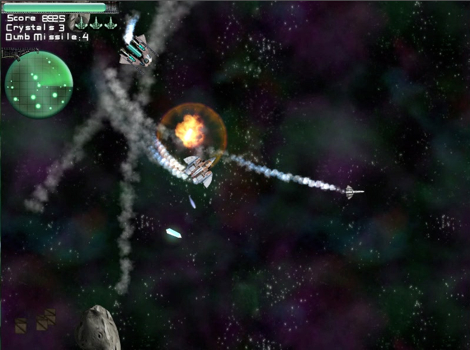
Join the lucrative trade of crystal mining! Navigate through deadly asteroid fields, do battle with menacing pirates and loathsome scavengers, and gather wealth for the purchase of powerful weapons and power-ups in this arcade style asteroids game.
In the year 2149 giant asteroid fields are revealed in the far reaches of space - fields highly concentrated with crystals of incredible value. Suddenly, untold wealth is up for grabs - that is, for those who dare venture to it. Thousands of the bravest pilots and most remorseless pirates blast off to claim (and steal!) their fortunes.
The most ambitious of these individuals call themselves the Argonauts, honest and brave adventurers, one and all. Their ship of choice is the Argo, a dual thruster fighter capable of housing laser blasters as well as missiles, bombs, and other technology to fend off pirates and other aggressors.
Though Argonauts are known to help each-other out in times of great peril, the vast isolation of space holds great dangers. Argonauts constantly battle with pirates and greedy scavengers just to stay alive. As you fly off into the depths of space to join the ranks of the Argonauts you ask yourself, do have what it takes to hold your ground in the chaos of the crystal mines?
- 3D OpenGL graphics
- Weapon store
- Original soundtrack
- Insane dogfights
Systeme Requirement
Mac OS X, G3 400Mhz, 16Mb video card
Whats New (1.21)
Fixed incompatibility with Mac OS X 10.5
Universal Binary
Enhanced Graphics
Κατεβάστε το από εδώ: http://www.danlabgames.com/index.php#/?GameID=argonaut
Standard Micro SIM can’t be cut into Nano SIM!
22 Σεπτεμβρίου 2012 19:06 ::
Υλικό (Hardware) |
Αγορά Τηλεπικοινωνιών |
Κινητή Τηλεφωνιά | iPhone
| iPhone 5

Those wanting to their iPhone 5 soon would probably be getting it from the first wave countries such as Singapore. While it is simple to think that a Nano SIM can be cut out from a standard Mini or Micro SIM, think again.
Giesecke & Devrient, the makers of the Nano SIM says that this is not possible. They have mentioned:
“As you surely know some people have cut down a “conventional” SIM (2FF) in a MicroSIM (3FF) with a knife or with a pair of scissors. Sometimes it has worked, sometimes not. Reason that this method functioned was that the 2FF and the 3FF SIM card has the same thickness. The thickness of the Nano-SIM is reduced by about 15 percent – so we think that a reducing only in size is not working.
Backward compatibility with older device models is ensured by an adapter solution that allows the Nano-SIM to be integrated into all established mobile devices for universal use.”
The thickness of standard SIM cards is 0.76mm, which is the reason why self cutting or SIM puncher makers work well to convert mini-SIM to micro-SIM. However the new nano SIM is only 0.67mm thick. While there’s a small chance that you can force it to fit by shaving some thickness off but you would risk having the SIM card damaged or worse, having it stuck on the nano SIM tray.
It is recommended to get the proper nano-SIM issued from telcos but so far nobody has announced its availability yet. The local telcos should consider offering it soon since there are number of Malaysians are getting their iPhone 5 from oversea sources.
Η Samsung ετοιμάζει νέα γενιά γρήγορων μνημών για φορητές συσκευές!
22 Σεπτεμβρίου 2012 18:24 ::
Υλικό (Hardware) |
Έρευνα & Ανάπτυξη |
Νέες Τεχνολογίες |
Νέα Προϊόντα Πληροφορικής | Samsung

Η Samsung ετοιμάζει μια νέα γενιά μνήμης RAM για φορητές συσκευές με χωρητικότητα 2GB και τεχνολογία LPDDR3. Οι νέες αυτές μνήμες διαθέτουν αυξημένο ρυθμό μεταφοράς δεδομένων (12.8 gigabytes/sec), οποίος είναι κατά 50% πιο γρήγορος από τη σημερινή τεχνολογία των LPDDR2 chip.
Πρακτικά ο αυξημένος ρυθμός δεδομένων επιτρέπει υποστήριξη υψηλής ευκρίνειας 3D γραφικών και full HD αναπαραγωγή video σε οθόνες μεγαλύτερες των 4" ιντσών. Η εταιρεία βελτιστοποίησε το νόμο του Moore ο οποίος θέλει τον διπλασιασμό των τρανζίστορ κάθε 18 μήνες, διαθέτοντας το νέο chip μέσα σε 10 μήνες από την παρουσίαση του προκατόχου του, που ξεκίνησε την παραγωγή τον Οκτώβριο του 2011.
Το LPDDR2 chip έχει χρησιμοποιηθεί σε αρκετές δημοφιλής συσκευές, όπως το Motorola Droid 4 και το iPad 3. Αν και η Apple δεν έχει ανακοινώσει ακόμη τα πλήρη τεχνικά χαρακτηριστικά του iPhone 5, πιθανολογείται ότι η συσκευή κάνει χρήση του ίδιου chip μνήμης RAM με 1GB. Οι πρώτες συσκευές που θα κάνουν χρήση της νέας τεχνολογίας RAM της Samsung αναμένεται να κυκλοφορήσουν στην αγορά το 2013.
Όπως αναφέρει ο πρόεδρος της εταιρείας στο τμήμα των μνημών Wanhoon Hong, "με την ταχεία ανάπτυξη της μνήμης 2GB LPDDR3 προχωράμε με μεγάλα βήματα στην επέκταση της κυριαρχίας μας στην αγορά σε παγκόσμιο επίπεδο". Η κυριαρχία της Samsung στο συγκεκριμένο χώρο οφείλεται σε μεγάλο βαθμό στην κατασκευή εξαρτημάτων για τις iOS συσκευές της Apple, μια συνεργασία που δύσκολα θα διακοπεί παρά της πολλαπλές διαμάχες των δύο εταιρειών στα δικαστήρια.
Πόσο κοστίζει η παραγωγή των iPhone 5 και πόσο πωλούνται;
22 Σεπτεμβρίου 2012 18:11 ::
Απόψεις & Γνώμες |
Υλικό (Hardware) |
Αγορά Τηλεπικοινωνιών |
Κινητή Τηλεφωνιά | Apple | iPhone
| iPhone 5
|
Νέα Προϊόντα Apple |
Νέα Προϊόντα Πληροφορικής

Η παραγωγή του νέου iPhone 5 των 16GB, κοστίζει στην Apple περί τα 207 δολάρια, σύμφωνα με ανάλυση της IHS iSuppli. Οι εκδόσεις των 32GB και των 64GB κοστίζουν κατά προσέγγιση 217 και 237 δολάρια αντίστοιχα.
Το λεγόμενο "Βill of Μaterials" (BOM), το κόστος των υλικών δηλαδή, για τις εκδόσεις των 16GB/32GB/64GB είναι αντίστοιχα 199/209/230 δολάρια και επιπλέον 8 δολάρια είναι το κατασκευαστικό κόστος.
Η Apple πουλάει τα αντίστοιχα μοντέλα στη λιανική αγορά προς 649, 749 και 849 δολάρια, ενώ για να κάνουμε και τις σχετικές συγκρίσεις, στην Ευρώπη και πιο συγκεκριμένα στη Γαλλία και τη Γερμανία, οι αρχικές τιμές διαμορφώθηκαν στα 679, 789 και 899 ευρώ για τα μοντέλα των 16GB/32GB/64GB αντίστοιχα.
Το πιο ακριβό τμήμα του iPhone 5, δεν είναι ο επεξεργαστής του, όπως αρκετοί θα περίμεναν, αλλά ο οθόνη του, τεχνολογίας in-cell, η οποία κοστίζει 44 δολάρια, 7 δολάρια παραπάνω από όσο κόστιζε η οθόνη του iPhone 4S.
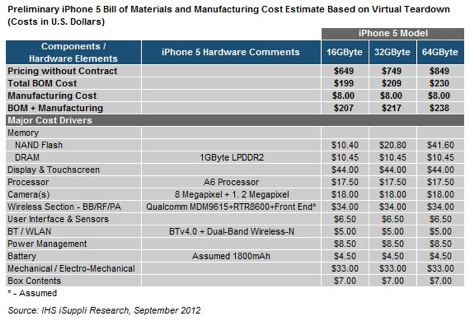
Αν και στα παραπάνω, δεν περιλαμβάνονται τα κόστη της συσκευασίας, των μεταφορικών, του software, πιθανά δικαιώματα προς τρίτους κλπ. η διαφορά του κόστους παραγωγής σε σχέση με τις τιμές λιανικής, φαίνεται από μεγάλη έως και... αδικαιολόγητα τεράστια, στα ακριβότερα μοντέλα.
Μπορείτε να δείτε την πλήρη ανάλυση της IHS iSuppli εδώ.
Λατρεμένο iPad!
21 Σεπτεμβρίου 2012 18:54 ::
Διασκέδαση & Ψυχαγωγία (Fun)
|
Φανατικοί Χρήστες Προϊόντων Apple
| iPad | Apple

Apple Software Update: OS X Lion Update 10.7.5 (Client Combo)
21 Σεπτεμβρίου 2012 18:48 ::
Υποστήριξη Apple Mac > Software Updates -
Αναβαθμίσεις Λογισμικού |
Υποστήριξη Apple Mac > Επίλυση
Προβλημάτων | Mac OS X Lion
10.7 |
Υποστήριξη Lion 10.7 |
Υποστήριξη Mac OS X |
Υποστήριξη Mac |
Υποστήριξη Πελατών Apple |
Υποστήριξη Χρηστών Mac |
Τεχνική Υποστήριξη Mac |
Τεχνική Υποστήριξη Apple Mac
| Mac OS X
| Mac

DOWNLOAD
Version: 10.7.5
Post Date: September 19, 2012
Download ID: DL1582
License: Update
File Size: 1.91 GB
System Requirements: OS X Lion 10.7
About OS X Lion Update 10.7.5 (Client Combo)
The 10.7.5 update is recommended for all OS X Lion users and includes general operating system fixes that improve the stability, compatibility and security of your Mac. It also includes Gatekeeper, a new security feature that helps you keep your Mac safe from malicious software by giving you more control over what apps are installed on your Mac.
The 10.7.5 update also includes fixes that:
▪ Resolve an issue where icons in Launchpad may get rearranged after a restart
▪ Improve Wi-Fi reliability for iMac (Late 2009 and newer)
▪ Resolve an issue using Spotlight to search an SMB server
▪ Improve compatibility connecting to Active Directory servers
For detailed information on this update, please visit this website: http://support.apple.com/kb/HT5313.
For information on the security content of this update, please visit: http://support.apple.com/kb/HT1222.
Apple Software Update: OS X Lion Update 10.7.5 (Client)
21 Σεπτεμβρίου 2012 18:46 ::
Υποστήριξη Apple Mac > Software Updates -
Αναβαθμίσεις Λογισμικού |
Υποστήριξη Apple Mac > Επίλυση
Προβλημάτων | Mac OS X Lion
10.7 |
Υποστήριξη Lion 10.7 |
Υποστήριξη Mac OS X |
Υποστήριξη Mac |
Υποστήριξη Πελατών Apple |
Υποστήριξη Χρηστών Mac |
Τεχνική Υποστήριξη Mac |
Τεχνική Υποστήριξη Apple Mac
| Mac OS X
| Mac
DOWNLOAD
Version: 10.7.5
Post Date: September 19, 2012
Download ID: DL1583
License: Update
File Size: 1.14 GB
System Requirements: OS X Lion 10.7.4
About OS X Lion Update 10.7.5 (Client)
The 10.7.5 update is recommended for all OS X Lion users and includes general operating system fixes that improve the stability, compatibility and security of your Mac. It also includes Gatekeeper, a new security feature that helps you keep your Mac safe from malicious software by giving you more control over what apps are installed on your Mac.
The 10.7.5 update also includes fixes that:
▪ Resolve an issue where icons in Launchpad may get rearranged after a restart
▪ Improve Wi-Fi reliability for iMac (Late 2009 and newer)
▪ Resolve an issue using Spotlight to search an SMB server
▪ Improve compatibility connecting to Active Directory servers
For detailed information on this update, please visit this website: http://support.apple.com/kb/HT5313.
For information on the security content of this update, please visit: http://support.apple.com/kb/HT1222.
Apple Software Update: Security Update 2012-004 (Snow Leopard)
21 Σεπτεμβρίου 2012 18:40 ::
Υποστήριξη Apple Mac > Software Updates -
Αναβαθμίσεις Λογισμικού |
Υποστήριξη Apple Mac > Επίλυση
Προβλημάτων | Mac OS X
Snow Leopard 10.6 |
Υποστήριξη Snow Leopard 10.6
|
Υποστήριξη Mac |
Υποστήριξη Mac OS X |
Υποστήριξη Πελατών Apple |
Υποστήριξη Χρηστών Mac |
Τεχνική Υποστήριξη Mac |
Τεχνική Υποστήριξη Apple Mac
| Mac OS X
| Mac

DOWNLOAD
Version: 2012-004
Post Date: September 19, 2012
Download ID: DL1586
File Size: 2.36 MB
System Requirements: Mac OS X 10.6.8
About Security Update 2012-004 (Snow Leopard)
Security Update 2012-004 is recommended for all users and improves the security of Mac OS X.
For information on the security content of this update, please visit this website: http://support.apple.com/kb/HT1222.
Apple Software Update: Security Update 2012-004 Server (Snow Leopard)
21 Σεπτεμβρίου 2012 18:36 ::
Υποστήριξη Apple Mac > Software Updates -
Αναβαθμίσεις Λογισμικού |
Υποστήριξη Apple Mac > Επίλυση
Προβλημάτων | Mac
OS X Snow Leopard Server 10.6
|
Υποστήριξη Snow Leopard Server 10.6
|
Υποστήριξη Mac OS X Server |
Υποστήριξη Mac |
Υποστήριξη Πελατών Apple |
Υποστήριξη Χρηστών Mac |
Τεχνική Υποστήριξη Mac |
Τεχνική Υποστήριξη Apple Mac
| Mac OS X
| Mac

DOWNLOAD
Version: 2012-004
Post Date: September 19, 2012
Download ID: DL1587
File Size: 276.45 MB
System Requirements: Mac OS X 10.6.8 Server
About Security Update 2012-004 Server (Snow Leopard)
Security Update 2012-004 is recommended for all servers and improves the security of Mac OS X.
For information on the security content of this update, please visit this website: http://support.apple.com/kb/HT1222.
Apple Software Update: iPhoto 9.4
21 Σεπτεμβρίου 2012 18:34 ::
Υποστήριξη Apple Mac > Software Updates -
Αναβαθμίσεις Λογισμικού |
Υποστήριξη Apple Mac > Επίλυση
Προβλημάτων | Mac OS
X Mountain Lion 10.8 | Mac OS X Lion
10.7 |
iPhoto
|
Παραγωγή & Επεξεργασία Γραφικών
|
Παραγωγή & Επεξεργασία Φωτογραφίας
|
Παραγωγή & Επεξεργασία Εικόνας
|
Οργάνωση & Διαχείριση Πληροφοριών
|
Υποστήριξη Mountain Lion 10.8
|
Υποστήριξη Lion 10.7 |
Υποστήριξη Mac OS X |
Υποστήριξη Mac |
Υποστήριξη Πελατών Apple |
Υποστήριξη Χρηστών Mac |
Τεχνική Υποστήριξη Mac |
Τεχνική Υποστήριξη Apple Mac
| Mac OS X
| Mac
DOWNLOAD
Version: 9.4
Post Date: September 19, 2012
Download ID: DL1589
File Size: 757.61 MB
System Requirements: OS X Lion 10.7.5, OS X Mountain Lion 10.8.2 or later
About iPhoto 9.4
What's New in Version 9.4
▪ Adds support for Shared Photo Streams on OS X Mountain Lion
▪ Comments can now be added to photos after publishing them to Facebook
▪ New card and calendar themes have been added
▪ A new File menu command can be used to open the current photo library in Aperture (if installed)
▪ Includes performance and stability improvements
Apple Software Update: MacBook Air EFI Firmware Update 2.5
21 Σεπτεμβρίου 2012 18:28 ::
Υποστήριξη Apple Mac > Software Updates -
Αναβαθμίσεις Λογισμικού |
Υποστήριξη Apple Mac > Επίλυση
Προβλημάτων | Firmware
Updates | EFI Updates
| Mac OS
X Mountain Lion 10.8 | Mac OS X Lion
10.7 |
MacBook
Air |
Τεχνική Υποστήριξη Mac |
Υποστήριξη Mountain Lion 10.8
|
Υποστήριξη Lion 10.7 |
Υποστήριξη Mac OS X |
Υποστήριξη Mac |
Υποστήριξη Πελατών Apple |
Υποστήριξη Χρηστών Mac |
Τεχνική Υποστήριξη Apple Mac
| Mac

DOWNLOAD
Version: 2.5
Post Date: September 19, 2012
Download ID: DL1592
File Size: 4.76 MB
System Requirements: OS X Lion 10.7.4 or later, OS X 10.8. or later
About MacBook Air EFI Firmware Update 2.5
This update is recommended for MacBook Air (mid 2012) models. This update fixes an issue where Turbo Boost does not activate when using Boot Camp, and resolves an issue where NetBoot does not function properly when using an Ethernet adapter.
Apple Software Update: MacBook Pro EFI Firmware Update 2.9
21 Σεπτεμβρίου 2012 18:25 ::
Υποστήριξη Apple Mac > Software Updates -
Αναβαθμίσεις Λογισμικού |
Υποστήριξη Apple Mac > Επίλυση
Προβλημάτων | Firmware
Updates | EFI Updates
| Mac OS
X Mountain Lion 10.8 | Mac OS X Lion
10.7 |
Υποστήριξη Mountain Lion 10.8
|
Υποστήριξη Lion 10.7 |
Υποστήριξη Mac OS X |
Υποστήριξη Mac |
Υποστήριξη Πελατών Apple |
Υποστήριξη Χρηστών Mac |
Τεχνική Υποστήριξη Mac |
Τεχνική Υποστήριξη Apple Mac
| MacBook Pro
| Mac

DOWNLOAD
Version: 2.9
Post Date: September 19, 2012
Download ID: DL1593
File Size: 4.29 MB
System Requirements
Mac OS X 10.7.4 or later: OS X 10.8.2 and later
About MacBook Pro EFI Firmware Update 2.9
This update is recommended for MacBook Pro (mid 2012) models. This update resolves an issue which can cause the system to hang during heavy processor loads.
Apple Software Update: MacBook Air SMC Update v1.7
21 Σεπτεμβρίου 2012 18:07 ::
Υποστήριξη Apple Mac > Software Updates -
Αναβαθμίσεις Λογισμικού |
Υποστήριξη Apple Mac > Επίλυση
Προβλημάτων | Firmware
Updates | SMC Update
| Mac OS
X Mountain Lion 10.8 | MacBook Air
|
Υποστήριξη Χρηστών Mac |
Υποστήριξη Πελατών Apple |
Υποστήριξη Mountain Lion 10.8
|
Υποστήριξη Mac OS X |
Υποστήριξη Mac |
Τεχνική Υποστήριξη Mac |
Τεχνική Υποστήριξη Apple Mac
| Mac OS X
| Mac
DOWNLOAD
Version: 1.7
Post Date: September 19, 2012
Download ID: DL1590
License: Update
File Size: 658 KB
System Requirements: OS X 10.8.2 or later
About MacBook Air SMC Update v1.7
This update enables Power Nap support on MacBook Air (Late 2010) computers and is recommended for all users running OS X v10.8.2 or later.
Apple Software Update: MacBook Pro Retina EFI Update v1.0
21 Σεπτεμβρίου 2012 16:43 ::
Υποστήριξη Apple Mac > Software Updates -
Αναβαθμίσεις Λογισμικού |
Υποστήριξη Apple Mac > Επίλυση
Προβλημάτων |
Υλικό (Hardware) | MacBook Pro
| Mac OS
X Mountain Lion 10.8 | Mac OS X Lion
10.7 |
Υποστήριξη Mountain Lion 10.8
|
Υποστήριξη Lion 10.7 |
Υποστήριξη Mac OS X |
Υποστήριξη Mac |
Υποστήριξη Πελατών Apple |
Υποστήριξη Χρηστών Mac |
Τεχνική Υποστήριξη Mac |
Τεχνική Υποστήριξη Apple Mac
| Mac OS X
| Mac
DOWNLOAD
Version: 1.0
Post Date: September 19, 2012
Download ID: DL1591
License: Update
File Size: 4.97 MB
System Requirements: OS X 10.7.4 or later, OS X 10.8 or later
About MacBook Pro Retina EFI Update v1.0
This update is recommended for MacBook Pro with Retina display (mid 2012) models.
This update resolves an issue which can cause the system to hang during heavy processor loads, and resolves an issue where NetBoot does not function properly when using an Ethernet adapter.
Apple Software Update: OS X Mountain Lion Update v10.8.2
21 Σεπτεμβρίου 2012 16:40 ::
Υποστήριξη Apple Mac > Software Updates -
Αναβαθμίσεις Λογισμικού |
Υποστήριξη Apple Mac > Επίλυση
Προβλημάτων | Mac OS
X Mountain Lion 10.8 |
Υποστήριξη Mountain Lion 10.8
|
Υποστήριξη Mac OS X |
Υποστήριξη Mac |
Υποστήριξη Πελατών Apple |
Υποστήριξη Χρηστών Mac |
Τεχνική Υποστήριξη Mac |
Τεχνική Υποστήριξη Apple Mac
| Mac OS X
| Mac

DOWNLOAD
Version: 10.8.2
Post Date: September 19, 2012
Download ID: DL1580
License: Update
File Size: 665.48 MB
System Requirements: OS X Mountain Lion v10.8.1
About OS X Mountain Lion Update v10.8.2
The 10.8.2 update is recommended for all OS X Mountain Lion users and includes new features and fixes. New features include:
▪ Single sign on for Facebook
▪ Facebook as an option when sharing links and photos
▪ Facebook friends' contact information and profile pictures in Contacts
▪ Facebook notifications in Notification Center
Game Center
▪ Share scores to Facebook, Twitter, Mail, or Messages
▪ Facebook friends are included in Game Center friend recommendations
▪ Facebook Like button for games
▪ Challenge friends to beat your score or achievement
Other new features
▪ Power Nap support for MacBook Air (Late 2010)
▪ iMessages sent to your phone number now appear in Messages on your Mac
▪ From Safari and Mail on your Mac you can add passes to Passbook on your iPhone or iPod touch running iOS 6
▪ New shared Reminders lists
▪ FaceTime now receives calls sent to your phone number
▪ New sort options allow you to sort notes by title, the date you edited them, and when you created them
▪ Dictation now supports Mandarin, Cantonese, Spanish, Korean, Canadian English, Canadian French, and Italian
▪ The Dictionary application now includes a French definition dictionary
▪ Sina Weibo profile photos can now be added to Contacts
The 10.8.2 update also includes general operating system fixes that improve the stability, compatibility and security of your Mac, including the following fixes:
▪ An option to discard the changes in the original document when choosing Save As
▪ Unsent drafts are opened automatically when launching Mail
▪ Receive Twitter notifications for mentions and replies from anyone
▪ URLs are shortened when sending tweets from Notification Center
▪ Notifications are disabled when AirPlay Mirroring is being used
▪ SSL support for Google searches from the Smart Search Field in Safari
▪ New preference to have Safari launch with previously open webpages
For detailed information on this update, please visit this website: http://support.apple.com/kb/HT5460
For information on the security content of this update, please visit: http://support.apple.com/kb/HT1222
Apple Software Update: OS X Lion Update 10.7.5 Server Combo
21 Σεπτεμβρίου 2012 16:37 ::
Υποστήριξη Apple Mac > Software Updates -
Αναβαθμίσεις Λογισμικού |
Υποστήριξη Apple Mac > Επίλυση
Προβλημάτων | Mac OS X
Lion Server 10.7 |
Υποστήριξη Lion 10.7 |
Υποστήριξη Πελατών Apple |
Υποστήριξη Χρηστών Mac |
Υποστήριξη Mac OS X |
Υποστήριξη Mac |
Τεχνική Υποστήριξη Mac |
Τεχνική Υποστήριξη Apple Mac
| Mac OS X
| Mac
DOWNLOAD
Version: 10.7.5
Post Date: September 19, 2012
Download ID: DL1585
License: Update
File Size: 1.99 GB
System Requirements: OS X Lion 10.7 Server
About OS X Lion Update 10.7.5 Server Combo
The 10.7.5 update is recommended for all servers currently running Lion Server. This update includes general operating system fixes that enhance the stability, compatibility, migration and security of your server and specific fixes for:
▪ maintaining Spotlight index when changing share point settings
▪ creating and connecting to Open Directory master
▪ improved reliability of password authentication
▪ using Software Update Server to automatically download and enable software updates
▪ reliably booting NetRestore images created with System Image Utility
▪ using Profile Manager to set the Mobility sync frequency settings for mobile accounts
▪ improved reliability when changing an Xsan metadata controller into a client
This update also includes all the changes included in the 10.7.4 update.
For detailed information on this update, please visit this website: http://support.apple.com/kb/HT5314.
For detailed information on security updates, please visit this website: http://support.apple.com/kb/HT1222.
Apple Software Update: OS X Mountain Lion Update v10.8.2 (Combo)
21 Σεπτεμβρίου 2012 16:32 ::
Υποστήριξη Apple Mac > Software Updates -
Αναβαθμίσεις Λογισμικού |
Υποστήριξη Apple Mac > Επίλυση
Προβλημάτων | Mac OS
X Mountain Lion 10.8 |
Υποστήριξη Mountain Lion 10.8
|
Υποστήριξη Mac OS X |
Υποστήριξη Mac |
Υποστήριξη Πελατών Apple |
Υποστήριξη Χρηστών Mac |
Τεχνική Υποστήριξη Mac |
Τεχνική Υποστήριξη Apple Mac
| Mac OS X
| Mac
DOWNLOAD
Version: 10.8.2
Post Date: September 19, 2012
Download ID: DL1581
License: Update
File Size: 665.39 MB
System Requirements: OS X Mountain Lion v10.8
About OS X Mountain Lion Update v10.8.2 (Combo)
The 10.8.2 update is recommended for all OS X Mountain Lion users and includes new features and fixes. New features include:
▪ Single sign on for Facebook
▪ Facebook as an option when sharing links and photos
▪ Facebook friends' contact information and profile pictures in Contacts
▪ Facebook notifications in Notification Center
Game Center
▪ Share scores to Facebook, Twitter, Mail, or Messages
▪ Facebook friends are included in Game Center friend recommendations
▪ Facebook Like button for games
▪ Challenge friends to beat your score or achievement
Other new features
▪ Power Nap support for MacBook Air (Late 2010)
▪ iMessages sent to your phone number now appear in Messages on your Mac
▪ From Safari and Mail on your Mac you can add passes to Passbook on your iPhone or iPod touch running iOS 6
▪ New shared Reminders lists
▪ FaceTime now receives calls sent to your phone number
▪ New sort options allow you to sort notes by title, the date you edited them, and when you created them
▪ Dictation now supports Mandarin, Cantonese, Spanish, Korean, Canadian English, Canadian French, and Italian
▪ The Dictionary application now includes a French definition dictionary
▪ Sina Weibo profile photos can now be added to Contacts
The 10.8.2 update also includes general operating system fixes that improve the stability, compatibility and security of your Mac, including the following fixes:
▪ An option to discard the changes in the original document when choosing Save As
▪ Unsent drafts are opened automatically when launching Mail
▪ Receive Twitter notifications for mentions and replies from anyone
▪ URLs are shortened when sending tweets from Notification Center
▪ Notifications are disabled when AirPlay Mirroring is being used
▪ SSL support for Google searches from the Smart Search Field in Safari
▪ New preference to have Safari launch with previously open webpages
For detailed information on this update, please visit this website: http://support.apple.com/kb/HT5460
For information on the security content of this update, please visit: http://support.apple.com/kb/HT1222
Apple Software Update: OS X Lion Update 10.7.5 Server
21 Σεπτεμβρίου 2012 16:27 ::
Υποστήριξη Apple Mac > Software Updates -
Αναβαθμίσεις Λογισμικού |
Υποστήριξη Apple Mac > Επίλυση
Προβλημάτων |
Διαχείριση Διακομιστών (Servers
Administration) | Mac OS X
Lion Server 10.7 |
Υποστήριξη Lion 10.7 |
Υποστήριξη Mac OS X |
Υποστήριξη Mac |
Υποστήριξη Πελατών Apple |
Υποστήριξη Χρηστών Mac |
Τεχνική Υποστήριξη Mac |
Τεχνική Υποστήριξη Apple Mac
| Mac OS X
| Mac
DOWNLOAD
Version: 10.7.5
Post Date: September 19, 2012
Download ID: DL1584
License: Update
File Size: 1.22 GB
System Requirements: OS X Lion 10.7 Server
About OS X Lion Update 10.7.5 Server
The 10.7.5 update is recommended for all servers currently running Lion Server. This update includes general operating system fixes that enhance the stability, compatibility, migration and security of your server and specific fixes for:
▪ maintaining Spotlight index when changing share point settings
▪ creating and connecting to Open Directory master
▪ improved reliability of password authentication
▪ using Software Update Server to automatically download and enable software updates
▪ reliably booting NetRestore images created with System Image Utility
▪ using Profile Manager to set the Mobility sync frequency settings for mobile accounts
▪ improved reliability when changing an Xsan metadata controller into a client
For detailed information on this update, please visit this website: http://support.apple.com/kb/HT5314.
For detailed information on security updates, please visit this website: http://support.apple.com/kb/HT1222.
Apple Software Update: Aperture 3.4
21 Σεπτεμβρίου 2012 16:24 ::
Υποστήριξη Apple Mac > Software Updates -
Αναβαθμίσεις Λογισμικού | Aperture
|
Υποστήριξη Apple Mac > Επίλυση
Προβλημάτων |
Παραγωγή & Επεξεργασία Φωτογραφίας
|
Παραγωγή & Επεξεργασία Εικόνας
|
Παραγωγή & Επεξεργασία Γραφικών
| Mac OS
X Mountain Lion 10.8 | Mac OS X Lion
10.7 |
Υποστήριξη Mountain Lion 10.8
|
Υποστήριξη Lion 10.7 |
Υποστήριξη Mac OS X |
Υποστήριξη Χρηστών Mac |
Υποστήριξη Πελατών Apple |
Τεχνική Υποστήριξη Mac |
Τεχνική Υποστήριξη Apple Mac
| Mac OS X
| Mac
DOWNLOAD
Version: 3.4
Post Date: September 19, 2012
Download ID: DL1588
File Size: 554.48 MB
System Requirements: OS X Lion 10.7.5, OS X 10.8.2 or later
What's New in Aperture 3.4:
▪ Adds support for Shared Photo Streams on OS X Mountain Lion
▪ A new File menu command can be used to open the current photo library in iPhoto
▪ Includes performance and stability improvements
The update is recommended for all users of Aperture 3.
Έρευνες έδειξαν ότι το iPad εξασφαλίζει το καλύτερο ξύπνημα!
20 Σεπτεμβρίου 2012 14:28 ::
Διασκέδαση & Ψυχαγωγία (Fun)
|
Φανατικοί Χρήστες Προϊόντων Apple
| Apple | iPad

Η Apple συμμαχεί με Μυστικές Οργανώσεις της Σκοτεινής Νέας Τάξεως Πραγμάτων και δίνει τον εξ αποστάσεως έλεγχο των iPhone σε Κυβερνήσεις και Μυστικές Υπηρεσίες!!! - Apple granted patent to disable iPhone recordings near government buildings or political events!!!
19 Σεπτεμβρίου 2012 19:19 :: Apple |
Κινητή Τηλεφωνιά |
Νέες Τεχνολογίες |
Νέα Προϊόντα Πληροφορικής |
Νέα Προϊόντα Apple |
Προσωπικά Δεδομένα |
Νομικά Θέματα |
Δικαιώματα Καταναλωτών |
Ψηφιακή Ασφάλεια |
Αγορά Πληροφορικής |
Αγορά Τηλεπικοινωνιών |
Ασύρματα & Ενσύρματα Δίκτυα
| iPhone
| iPhone 5
| iPhone 4S
| iPhone 4
| iPhone 3GS
| iPhone 3G
| iPhone 2G
| iOS

You might think that the remote vehicle "start" capabilities offered through some car companies, like OnStar via General Motors, for example, is a "cool" thing to have. If so, realize this: A company that can remotely start your vehicle and unlock your door can also remotely shut you out of it or shut it down completely, especially if forced to do so by authorities (who may or may not have a court order to do so). That kind of technology works both ways, so to speak.
That's an important thing to consider, given the fact that Apple, Inc., was recently granted a patent enabling the company to wirelessly disable the camera function on specific iPhones in certain locations, "sparking fears that such techniques could be used to prevent citizens from communicating with each other or taking video during protests or events such as political conventions and gatherings," PrisonPlanet.com reported.
In this electronic day and age, just about all of us are aware that cellphone-generated video is easy to take and easy to upload to an audience of millions within moments. Most of us have seen the cellphone video of a fight or a confrontation or another impactful incident involving civilians and authorities. It's a powerful medium that very often offers a point of view not available to the mainstream media - but carried by them, nonetheless.
That may all be about to change.
Freedom is not a given
Theoretically, according to U.S. Patent No. 8,254,902, published recently, "apparatus and methods of enforcement of policies upon a wireless device" could be implemented with the flick of an electronic switch.
According to the patent:
Apparatus and methods for changing one or more functional or operational aspects of a wireless device, such as upon the occurrence of a certain event. In one embodiment, the event comprises detecting that the wireless device is within range of one or more other devices. In another variant, the event comprises the wireless device associating with a certain access point. In this manner, various aspects of device functionality may be enabled or restricted (device "policies"). This policy enforcement capability is useful for a variety of reasons, including for example to disable noise and/or light emanating from wireless devices (such as at a movie theater), for preventing wireless devices from communicating with other wireless devices (such as in academic settings), and for forcing certain electronic devices to enter "sleep mode" when entering a sensitive area.
What that means is, an encoded signal could possibly be transmitted to all wireless devices entering "a sensitive area" (and who defines what that is?) which would command them to disable all recording functions.
Feeling safer now?
The fear, obviously, is that this capability can and will be used by authorities at given times to control what you can and cannot document on your personal device, based on their whims and needs.
Not a good development for those who love freedom.
Just when technology was set to make more of the world instantly accessible...
This development comes on top of an innovation by technology companies to make wireless connectivity a major component of the latest cameras; this would not bode well for photographers and citizen journalists who are already having their first and fourth amendment rights trampled.
Says Michael Zhang at the tech site Peta Pixel:
"If this type of technology became widely adopted and baked into cameras, photography could be prevented by simply setting a 'geofence' around a particular location, whether it's a movie theater, celebrity hangout spot, protest site, or the top secret rooms at 1 Infinite Loop, Cupertino, California."
The same site offers some soothing advice as well:
"Companies often file patents for all kinds of random technologies that never end up seeing the light of day, so you shouldn't be too concerned about this latest document. It's just a warning of what the future could potentially hold."
Knowledge is power. We'll be keeping an eye on this development for our readers.
Sources:
http://www.naturalnews.com/037220_iPhone_recordings_patent.html
http://www.prisonplanet.com/apple-granted-patent-to-disable-cameras-according-to-location.html
http://www.petapixel.com/2012/08/30/apple-moves-a-step-closer-to-location-based-camera-disabling/
http://patft.uspto.gov/netacgi/nph-Parser?Sect1=PTO2&Sect2=HITOFF&u=
%2Fnetahtml%2FPTO%2Fsearch-adv.htm&r=36&p=1&f=G&l=50&d=PTX
T&S1=%2820120828.PD.+AND+Apple.ASNM.%29&OS=ISD/20120828+
AND+AN/Apple&RS=%28ISD/20120828+AND+AN/Apple%29
Apple Software Update: Apple Remote Desktop 3.5.3 Admin
19 Σεπτεμβρίου 2012 19:16 ::
Υποστήριξη Apple Mac > Software Updates -
Αναβαθμίσεις Λογισμικού |
Υποστήριξη Apple Mac > Επίλυση
Προβλημάτων | Apple Remote
Desktop | Mac OS
X Mountain Lion 10.8 | Mac OS X Lion
10.7 |
Mac OS X
Snow Leopard 10.6 | Mac
OS X Snow Leopard Server 10.6
|
Υποστήριξη Mountain Lion 10.8
|
Υποστήριξη Lion 10.7 |
Υποστήριξη Snow Leopard 10.6
|
Υποστήριξη Snow Leopard Server 10.6
|
Υποστήριξη Mac OS X |
Υποστήριξη Mac OS X Server |
Υποστήριξη Πελατών Apple |
Υποστήριξη Χρηστών Mac |
Τεχνική Υποστήριξη Mac |
Τεχνική Υποστήριξη Apple Mac
| Mac OS X
| Mac
DOWNLOAD
Version: 3.5.3
Post Date: September 17, 2012
Download ID: DL1579
License: Update
File Size: 26.6 MB
System Requirements: Mac OS X v10.6 Snow Leopard or later
Apple Remote Desktop is a powerful desktop management solution for all your networked Mac OS X computers. You can automatically distribute software, remotely configure and control systems, offer real-time online help to end users, create detailed software and hardware reports, and automate your IT workflows. All without leaving your desk.
Read the following before you install. It includes details on Apple Remote Desktop, system requirements, and known issues.
Apple Remote Desktop also provides onscreen instructions. To access onscreen instructions, choose Help > Remote Desktop Help. Click Contents to browse a list of topics or type your question in the Search field and press Return.
For information about support, training and certification programs visit the Apple Web site at http://www.apple.com/support/remotedesktop.
Visit the Apple Web site at http://www.apple.com/remotedesktop for more information about Apple Remote Desktop.
For detailed information on this update, please visit this website: http://support.apple.com/kb/HT5432
For information on the security content of this update, please visit: http://support.apple.com/kb/HT1222
Samsung Galaxy Camera Unveiled, More Phonecamera Than Cameraphone!
19 Σεπτεμβρίου 2012 19:10 ::
Νέα Προϊόντα Πληροφορικής |
Νέες Τεχνολογίες | Samsung
|
Κινητή Τηλεφωνιά |
Παραγωγή & Επεξεργασία Φωτογραφίας
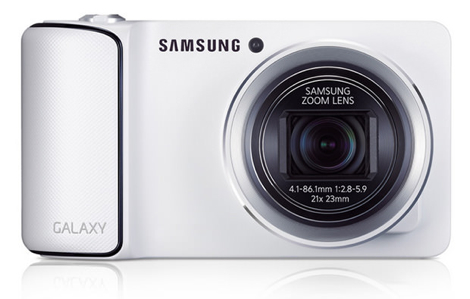
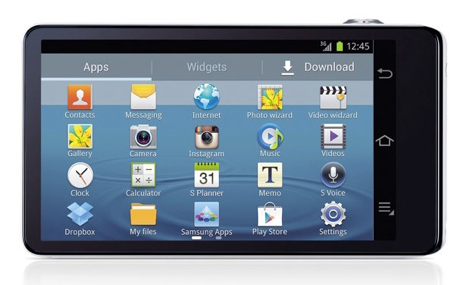
Well, that’s one leaked camera certainly didn’t take long to become a reality. Less than half an hour after we shared the first leaked photos of the Samsung Galaxy Camera, the camera was officially announced over in Berlin. Here’s the basic spec lowdown: Android 4.1 Jelly Bean, a 16 megapixel 1/2.3″ BSI CMOS sensor, a 21x f/2.8-5.9 23-480mm (35mm equiv.) lens, a 4.8-inch HD LCD screen, a minimal smartphone-esque design, a 1.4Ghz quad core processor, 8GB of internet storage, ISO of up to 3200, and 3G/Wi-Fi or 4G/Wi-Fi.
Powered by Android, the entire range of apps available through the Google Play marketplace are at your disposal. You can do things like play Angry Birds, check your email, browse the web, find your way to your shoots using a GPS app, and share through Instagram. That’s the power of the “phonecamera”.
3G and 4G connectivity are achieved through a small micro-SIM slot found next to the microSD card and battery pack.
Like a good smartphone-based device, the Galaxy camera offers a voice control feature for handling certain functions without needing to touch the camera. You can say things like “zoom in” and “shoot” for hands-free control.
An “Auto Cloud Backup” feature allows users to automatically backup their photographs to the cloud, while a “Share Shot” feature will share photos as their shot. Additionally, the camera can be paired up with other Wi-Fi enabled devices for easy photo transfers.
On the side of the camera, you’ll find a flash-release button that causes the pop-up flash to appear. The entire camera is elegantly designed, with minimal controls — very Apple-esque, if you ask us. There’s a power button, a shutter release coupled with a zoom toggle, and an on/off button. Besides that, you’ll be interacting with the camera entirely through the giant touchscreen and touch-buttons on the back.
It’s interesting that Samsung chose not to bake voice calling functionality into the camera — you’ll be able to use Skype and other VOIP apps, of course — which would have created a mind-boggling fusion between the camera and phone worlds. It would also have allowed people to completely replace their current smartphone, reducing the number of gadgets in their pockets by one.
The Samsung Galaxy Camera will begin hitting store shelves come October, and will be available at both camera and phone stores. Pricing hasn’t been announced.
Apple Software Update: iTunes 10.7
15 Σεπτεμβρίου 2012 17:39 ::
Υποστήριξη Apple Mac > Software Updates -
Αναβαθμίσεις Λογισμικού |
Υποστήριξη Apple Mac > Επίλυση
Προβλημάτων |
Αναπαραγωγή Ήχου & Μουσικής
| Mac Mini
| Mac OS
X Mountain Lion 10.8 | Mac OS X Lion
10.7 |
Mac OS X
Snow Leopard 10.6 | Mac
OS X Snow Leopard Server 10.6
| Microsoft
Windows 8 | Microsoft
Windows 7 | Microsoft
Windows Vista | Microsoft
Windows XP | Microsoft
Windows | iPod | iPod
Classic | iPod Nano
| iPod
Shuffle | iPod Touch
| iBook | iPhone
| IBM | iPhone 2G
| iPhone 3G
| iPhone 3GS
| iPhone 4
| iPhone 4S
| iPhone 5
| iPad | iPad New
| iPad 2
| iTunes
|
Υποστήριξη Πελατών Apple |
Υποστήριξη Mountain Lion 10.8
|
Υποστήριξη Mac OS X |
Υποστήριξη Lion 10.7 |
Υποστήριξη Snow Leopard 10.6
|
Υποστήριξη Snow Leopard Server 10.6
|
Υποστήριξη Mac OS X Server |
Υποστήριξη Mac |
Υποστήριξη Χρηστών Mac |
Τεχνική Υποστήριξη Mac |
Τεχνική Υποστήριξη Apple Mac
| Mac OS X
| Mac

DOWNLOAD
Version: 10.7
Post Date: September 12, 2012
Download ID: DL1576
File Size: OS X (157.33 MB ) Windows (74.91 MB) Windows64 (76.79 MB)
System Requirements:
Software:
• Mac OS X version 10.6.8 or later
• Safari 4.0.3 or later
• 350MB of available disk space
• iTunes in the Cloud and iTunes Match availability may vary by country.
Hardware:
• Mac computer with an Intel Core processor and 512MB of RAM
• To play 720p HD video, an iTunes LP, or iTunes Extras, a 2.0GHz Intel Core 2 Duo or faster processor and 1GB of RAM is required.
• To play 1080p HD video, a 2.4GHz Intel Core 2 Duo or faster processor and 2GB of RAM is required.
• Screen resolution of 1024x768 or greater; 1280x800 or greater is required to play an iTunes LP or iTunes Extras
• Broadband Internet connection to use the iTunes Store
• Apple combo drive or SuperDrive to create audio, MP3, or back-up CDs; some non-Apple CD-RW recorders may also work
• Apple SuperDrive to back up your library to DVDs; some non-Apple DVD-RW drives may also work
iTunes 10.7 adds support for iOS 6 running on compatible iPhone, iPad, and iPod touch models.
This update also adds support for the latest iPod nano and iPod shuffle models.
For information on the security content of this update, please visit: http://support.apple.com/kb/HT1222
Apple Software Update: iMovie 9.0.8
15 Σεπτεμβρίου 2012 17:32 ::
Υποστήριξη Apple Mac > Software Updates -
Αναβαθμίσεις Λογισμικού |
Υποστήριξη Apple Mac > Επίλυση
Προβλημάτων | Mac OS
X Mountain Lion 10.8 | Mac OS X Lion
10.7 |
iMovie
| Quicktime
|
Παραγωγή & Επεξεργασία Video
|
Υποστήριξη Mountain Lion 10.8
|
Υποστήριξη Lion 10.7 |
Υποστήριξη Mac OS X |
Υποστήριξη Mac |
Υποστήριξη Πελατών Apple |
Υποστήριξη Χρηστών Mac |
Τεχνική Υποστήριξη Mac |
Τεχνική Υποστήριξη Apple Mac
| Mac OS X
| Mac

DOWNLOAD
Version: 9.0.8
Post Date: September 05, 2012
Download ID: DL1574
License: Update
File Size: 1.08 GB
System Requirements: OS X Lion v10.7.4 or later
Addresses an issue related to third-party QuickTime components that could prevent iMovie from opening.
Apple Software Update: Java for Mac OS X 10.6 Update 10
15 Σεπτεμβρίου 2012 17:28 ::
Υποστήριξη Apple Mac > Software Updates -
Αναβαθμίσεις Λογισμικού |
Υποστήριξη Apple Mac > Επίλυση
Προβλημάτων | Mac OS
X Mountain Lion 10.8 | Mac
OS X Mountain Lion Server 10.8
| Mac OS X Lion
10.7 |
Mac OS X
Lion Server 10.7 | Mac OS X
Snow Leopard 10.6 | Mac
OS X Snow Leopard Server 10.6
|
Υποστήριξη Mountain Lion 10.8
|
Υποστήριξη Mountain Lion Server 10.8
|
Υποστήριξη Lion 10.7 |
Υποστήριξη Lion Server 10.7 |
Υποστήριξη Snow Leopard 10.6
|
Υποστήριξη Snow Leopard Server 10.6
|
Υποστήριξη Mac OS X |
Υποστήριξη Mac OS X Server |
Υποστήριξη Χρηστών Mac |
Υποστήριξη Mac |
Τεχνική Υποστήριξη Mac |
Υποστήριξη Πελατών Apple |
Τεχνική Υποστήριξη Apple Mac
| Mac OS X
| Java | Mac

DOWNLOAD
Version: 1.6.0_35
Post Date: September 04, 2012
Download ID: DL1573
License: Update
File Size: 81.9 MB
System Requirements: Mac OS X v10.6.8 Snow Leopard
Java for Mac OS X 10.6 Update 10 delivers improved security, reliability, and compatibility by updating Java SE 6 to 1.6.0_35.
This update configures web browsers to not automatically run Java applets. Java applets may be re-enabled by clicking the region labeled "Inactive plug-in" on a web page. If no applets have been run for an extended period of time, the Java web plug-in will deactivate.
Please quit any web browsers and Java applications before installing this update.
SHA1 = 6218979ae4eaef5ea7849cb4455e2c6f8bf362d2
See http://support.apple.com/kb/HT5368 for more details about this update.
See http://support.apple.com/kb/HT1222 for information about the security content of this update.
Apple Software Update: Java for OS X 2012-005
15 Σεπτεμβρίου 2012 17:09 ::
Υποστήριξη Apple Mac > Software Updates -
Αναβαθμίσεις Λογισμικού |
Υποστήριξη Apple Mac > Επίλυση
Προβλημάτων | Mac OS X
Lion Server 10.7 | Mac OS X Lion
10.7 |
Mac
OS X Mountain Lion Server 10.8
| Mac OS
X Mountain Lion 10.8 |
Υποστήριξη Mac OS X |
Υποστήριξη Mountain Lion 10.8
|
Υποστήριξη Mountain Lion Server 10.8
|
Υποστήριξη Lion Server 10.7 |
Υποστήριξη Lion 10.7 |
Υποστήριξη Mac OS X Server |
Υποστήριξη Mac |
Τεχνική Υποστήριξη Apple Mac
|
Υποστήριξη Πελατών Apple |
Υποστήριξη Χρηστών Mac |
Τεχνική Υποστήριξη Mac | Mac OS X
| Java | Mac
DOWNLOAD
Version: 1.6.0_35
Post Date: September 04, 2012
Download ID: DL1572
License: Update
File Size: 67.2 MB
System Requirements: OS X Lion v10.7 or later, OS X Mountian Lion v10.8 or later
Java for OS X 2012-005 delivers improved security, reliability, and compatibility by updating Java SE 6 to 1.6.0_35.
This update configures the Java plug-in to deactivate when no applets are run for an extended period of time. If the prior update named "Java for OS X 2012-004" was not installed, this update will disable the Java web plug-in immediately. Java applets may be re-enabled by clicking the region labeled "Inactive plug-in" on a web page.
Please quit any web browsers and Java applications before installing this update.
SHA1 = e0750c72972b8a2ccbcb3144bb31d74419276387
See http://support.apple.com/kb/HT5367 for more details about this update.
See http://support.apple.com/kb/HT1222 for information about the security content of this update.
Τρέμετε φρούτα και λαχανικά! H Apple μηνύει το Πολωνικό online οπωροπωλείο Α.pl!
13 Σεπτεμβρίου 2012 17:02 :: Apple |
Νομικά Θέματα

Mετά τις πολυάριθμες δικαστικές διαμάχες ανά τον κόσμο με κολοσσούς και εταιρίες από των χώρο της τεχνολογίας, όπως η Samsung, η Apple φαίνεται να αποφάσισε πως πρέπει να προστατεύσει τα πνευματικά της δικαιώματα και σε άλλους επαγγελματικούς κλάδους. Έτσι λοιπόν σύμφωνα με Πολωνικό site η Apple απαίτησε από το Πολωνικό Γραφείο Διπλωμάτων Ευρεσιτεχνίας στις 29 Αυγούστου, να ακυρώσει το trademark που ανήκει στην εταιρία A.PL Internet SA και πρόκειται ουσιαστικά για ένα online οπωροπωλείο με την ονομασία a.pl το οποίο δραστηριοποιείται στην Πολωνία.
Έτσι ο συνδυασμός της κατάληξης για τα Πολωνικά domains .pl, με το πρώτο γράμμα της Πολωνικής αλφαβήτου a, θεωρούνται ικανά από τον Αμερικανικό κολοσσό για να βλάψουν τα συμφέροντά του. Προφανώς η Αpple θεωρεί πως το εν λόγω διαδικτυακό οπωροπωλείο αντιγράφει την ηχητική του ονόματός της. Επίσης είναι πιθανό η Apple να μηνύει την a.pl και για το λογότυπό της ιστοσελίδας fresh24.pl το οποίο επίσης ανήκει στην Πολωνική εταιρία. Έτσι, όπως και στις περισσότερες αντίστοιχες περιπτώσεις, η Apple κατηγορεί τη a.pl πως εκμεταλλεύεται την δυναμική και την φήμη της και πως υπάρχει πιθανότητα σύγχυσης στο καταναλωτικό κοινό.
Από την μεριά της η a.pl προφανώς προσπαθεί να υπερασπιστεί του λογότυπού και της επωνυμίας της και δηλώνει πως οι δυο εταιρίες δραστηριοποιούνται σε εντελώς διαφορετικούς επιχειρηματικούς κλάδους και οπότε δεν υπάρχει περίπτωση σύγχυσης των καταναλωτών.
Εάν δεν βρεθεί κάποια εξωδικαστική λύση τότε είτε θα απορριφθεί το αίτημα της Αpple είτε το online μανάβικο θα χάσει το δικαίωμα να χρησιμοποιεί την επωνυμία του. Σίγουρα όμως η όποια απόφαση θα αργήσει να βγει και πιθανώς εμείς θα συνεχίσουμε παρακολουθούμε την Apple να πρωταγωνιστεί και σε μελλοντικές δικαστικές διαμάχες με διάφορες εταιρίες ανά την υφήλιο.
Ανακοινώθηκε το iPhone 5!
13 Σεπτεμβρίου 2012 16:55 ::
Νέα Προϊόντα Apple |
Νέα Προϊόντα Πληροφορικής |
Αγορά Τηλεπικοινωνιών |
Νέες Τεχνολογίες |
Κινητή Τηλεφωνιά | Apple | iPhone 5
| iOS 6

H Apple επιβεβαίωσε τις φήμες για την ανακοίνωση του iPhone 5 με οθόνη 4 ιντσών, διαφορετική υποδοχή σύνδεσης και την υποστήριξη των ταχύτερων δικτύων κινητής τηλεφωνίας τέταρτης γενιάς. Πρόθυμη να ανταγωνιστεί το Nokia Lumia 920 και τις ικανότητές του στην λήψη φωτογραφιών στο σκοτάδι και σταθερών βίντεο, δήλωσε η εταιρεία για την βελτιωμένη κάμερα iSight.
Η Apple έκανε τα αποκαλυπτήρια του iPhone 5 την Δευτέρα 12 Σεπτεμβρίου, χωρίς ωστόσο να περιοριστεί σε αυτό. Το λεπτότερο και ελαφρύτερο iPhone έχει οθόνη 4 ιντσών 1136 x 640 pixel @ 326ppi (διατηρώντας το πλάτος, αυξάνοντας το μήκος της συσκευής), αξιοποιεί τα δίκτυα 4G/LTE και το Wi-Fi σε δύο συχνότητες.
H Apple ξεκινά να δέχεται παραγγελίες από την Παρασκευή 14 Σεπτεμβρίου σε τιμές iPhone 4S (με συμβόλαιο) και ρίχνει την τιμή του iPhone 4S 16GB στα 99 δολάρια με συμβόλαιο, κατά τη συνήθη πρακτική της. Η συσκευή θα κυκλοφορήσει στην ΗΠΑ και 20 συνολικά χώρες στις 21 Σεπτεμβρίου 2012 με πολλές ακόμα να ακολουθούν τον Οκτώβριο.
Θετικά σχόλια απέσπασε η δημιουργία ενός πιο λεπτού smartphone με μεγαλύτερη οθόνη και αυξημένη αυτονομία, γεγονός που χαρακτηρίστηκε «εντυπωσιακό τεχνολογικό επίτευγμα». Το iPhone 5 «αντέχει» 8 ώρες ομιλίας αν και σε LTE και 10 ώρες χρήσης σε Wi-Fi.
Το iPhone 5 αντλεί την επεξεργαστική του ισχύ από τον A6, ο οποίος σύμφωνα με την Apple επιτυγχάνει διπλάσιες επιδόσεις από το τσιπ της προηγούμενης γενιάς (το iPhone 4S είχε διπύρηνο A5).
To iPhone 5 δεν δέχεται κάρτες microSIM, αλλά nano SIM.
Σημαντική είναι η βελτίωση στον χρόνο λήψης των φωτογραφιών, με την Apple να κάνει λόγο για 40% πιο γρήγορη ανταπόκριση. Το iPhone 5 θα αναλαμβάνει επίσης την λήψη πανοραμικών φωτογραφιών (με αποτέλεσμα φωτογραφίες στα 28Mpixel), υποστηρίζει την αναγνώριση προσώπων και επιτρέπει την ταυτόχρονη λήψη φωτογραφιών και βίντεο. Στην λήψη βίντεο, η κάμερα υποστηρίζει 1080p με τεχνολογία σταθεροποίησης της λήψης. Η μπροστινή κάμερα είναι "FaceTime HD" 720p, με δυνατότητα βιντεοκλήσεων και μέσω των δικτύων κινητής τηλεφωνίας.
Πάντως, ανάμεικτα ήταν τα συναισθήματα για την αλλαγή της υποδοχής σύνδεσης του τηλεφώνου σε κάθε λογής περιφερειακά, με την Apple να αλλάζει τον connector των 30 pin εννέα χρόνια μετά την πρώτη παρουσίασή του με έναν οκτώ ακίδων, πλήρως ψηφιακό που τοποθετείται αμφίπλευρα. Μετά το Thunderbolt, η Apple παρουσιάζει το Lightning και υπόσχεται σύντομα νέα ηχεία και άλλα περιφερειακά από γνωστούς κατασκευαστές. Επιπλέον, για την αξιοποίηση των υπαρχόντων περιφερειακών η Apple προτείνει τη λύση των adaptor, πλήθος από τους οποίους θα διαθέσει επίσης η ίδια στην αγορά.
Επί σκηνής, έγινε επίδειξη του iOS 6 στο iPhone 5, δίνοντας έμφαση στα Shared Photo Streams για την άμεση κοινοποίηση φωτογραφιών σε ένα δίκτυο επιλεγμένων φίλων και συγγενών, αλλά και του νέου βελτιωμένου Siri και των χαρτών της Apple με εκατομμύρια σημεία ενδιαφέροντος.
Το iPhone 5 θα κυκλοφορήσει σε λευκό (χρώμα αλουμινίου στην πλάτη) και μαύρο χρώμα (με μαύρη πλάτη).
Ανακοινώθηκαν νέα iPod Νano και iPod Τouch!
13 Σεπτεμβρίου 2012 16:54 ::
Νέα Προϊόντα Apple |
Νέα Προϊόντα Πληροφορικής |
Νέες Τεχνολογίες | iPod | iPod Nano
| iPod Touch

Νέα σειρά iPod nano παρουσίασε σήμερα η Apple, τα οποία αποτελούν την 7η γενιά με το μεγαλύτερο νέο χαρακτηριστικό τους να είναι η μεγαλύτερη οθόνη, όπως επίσης και νέα iPod touch με Α5 επεξεργαστή και ενσωμάτωση του Siri, με την κυκλοφορία τους να ξεκινά από Οκτώβριο.
Για την ακρίβεια η οθόνη είναι 2.5" ινστών με υποστήριξη δυνατοτήτων moultitouch και προβολής φωτογραφιών. Έχει ενσωματωθεί κουμπί home ενώ διατίθεται επίσης και δέκτης FM. Όπως αναφέρεται ύστερα από απαίτηση πολλών χρηστών έχει προστεθεί συνδεσιμότητα Bluetooth για σύνδεση σε ηχεία τέτοια τεχνολογίας. Η μπαταρία του μπορεί να δώσει μέχρι και 30 ώρες αναπαραγωγής μουσικής. Θα κυκλοφορήσει σε επτά χρωματισμούς, αλουμίνιο, μαύρο, μωβ, πράσινο, μπλε, κίτρινο και κόκκινο. Όσοι το χρησιμοποιούν για τις δυνατότητες Nike+ δε θα χρειαστούν εξωτερικό αισθητήρα για να καταμετρά τις επιδόσεις τους στο τρέξιμο, καθώς υπάρχει ενσωματωμένος. Η θύρα φόρτισης των νέων iPod Nano είναι η ίδια που παρουσιάστηκε πριν από λίγο μαζί με το iPhone 5 και έχει την ονομασία Lighting. Η τιμή τους αγγίζει τα $149 δολάρια με χωρητικότητα 16 GB.
Όσον αφορά τα νέα iPod touch, πρόκειται για την 5η γενιά της συσκευής η οποία όπως αναφέρει η Apple είναι "ο πιο δημοφιλής media player του κόσμου". Έχει 6.1 χιλιοστά πάχος, 88 γραμμάρια βάρος ενώ εξωτερικά μοιάζει με τον προκατοχό του αλλά με πιο στρογγυλεμένο πίσω καπάκι. Η οθόνη είναι 4" ιντσών, όπως αυτή του iPhone 5 ενώ ο επεξεργαστής είναι ο Α5, τον οποίο συναντάμε στο iPhone 4S. Τα γραφικά του είναι επτά φορές καλύτερα από το προηγούμενο μοντέλο, ενώ η αυτονομία έχει βελτιωθεί αισθητά με 40 ώρες αναπαραγωγής μουσικής ή 8 ώρες video. Η κάμερά του είναι 5ΜΡ τεχνολογίας iSight με ταχύτητα κλείστρου f/2.4 και φακό 5 επιπέδων.
Ενδιαφέρον προκαλεί ένα επιπλέον κουμπί στο πίσω μέρος της συσκευής για να μπορεί κανείς να ενσωματώσει ένα κορδόνι για καλύτερη σταθερότητα στη λήψη φωτογραφιών. Η εμπρόσθια κάμερα έχει αναβαθμιστεί σε 720p για Facetime κλήσεις. Θα κυκλοφορήσει σε πέντε χρώματα, μπλε, μαύρο κίτρινο αλουμίνιο και κίτρινο. Η έκδοση των 16 GB κοστολογείται στα $299 δολάρια, τα 32 GB στα $299 δολάρια, ενώ η έκδοση με αποθηκευτικό χώρο 64 GB κοστίζει $399 δολάρια. Η 4η γενιά των iPod touch θα συνεχίσει να πωλείται στην εκδοση με χωρητικότητα 16 GB στα $199 και 32 GB στα $249 δολάρια.
Ανακοινώθηκαν επίσης και ακουστικά με νέο σχεδιασμό, με τον ήχο να διοχετεύεται πιο άμεσα στο αυτί. Ο σχηματισμός τους είναι προσεγμένος γεωμετρικά έτσι ώστε να ταιριάζουν σε όλα τα αυτιά. Υπάρχει επιπλέον και μια θύρα στο πίσω μέρος τους για καλύτερο εξαερισμό του αυτιού. Θα κυκλοφορήσουν και σε κόκκινο χρώμα, με συμβολισμό την καταπολέμηση του AIDS.
H EETT ενέκρινε τις τιμές χονδρικής και λιανικής του VDSL του OTE!
13 Σεπτεμβρίου 2012 15:40 ::
Αγορά Πληροφορικής |
Νέα Προϊόντα Πληροφορικής |
Νέες Τεχνολογίες |
Διαδίκτυο (Internet)

Σύμφωνα με δημοσιεύματα χθες το απόγευμα δόθηκε από την Εθνική Επιτροπή Τηλεπικοινωνιών και Ταχυδρομείων (ΕΕΤΤ) η αρχική έγκριση για την παροχή της υπηρεσίας του VDSL από τον ΟΤΕ και τους εναλλακτικούς παρόχους.
Χωρίς να υπάρχει επίσημη ακόμα πληροφόρηση η επιτροπή έχει εγκρίνει τις τιμές λιανικής που είχε προτείνει ο ΟΤΕ (19,90 ευρώ ανά μήνα για την ταχύτητα πρόσβασης έως 30 Mbps και 29,90 ευρώ μηνιαίως έως 50 Mbps, χωρίς να υπολογίζεται στην τιμή αυτή το πάγιο της γραμμής) καθώς και τις τιμές χονδρικής για τους παρόχους οι οποίες είναι χαμηλότερες κατά 3 ευρώ σε σχέση με αυτές που είχαν αρχικά προταθεί από τον Οργανισμό. Στην απόφαση, σύμφωνα πάντα με τις πληροφορίες γίνεται λόγος για πιλοτική εφαρμογή του σχεδίου τιμών.
Για τα υπόλοιπα θέματα του VDSL αναμένεται νέα συνεδρίαση της Επιτροπή μέσα στην επόμενη εβδομάδα καθώς ο πρόεδρος της Επιτροπής Λ. Κανέλλος θα απουσιάσει την τρέχουσα εβδομάδα στο εξωτερικό λόγω των υποχρεώσεών του στο Σώμα Ευρωπαίων Ρυθμιστών (BEREC).
Nα σημειωθεί πως δεν υπάρχουν επίσημες ανακοινώσεις και πως οι πάροχοι δεν έχουν ενημερωθεί ακόμα.
"Simple Task": Οργανώστε τις εργασίες σας πανεύκολα, γρήγορα και δωρεάν!
12 Σεπτεμβρίου 2012 18:27 ::
Πρόταση Δοκιμής |
Λογισμικό Mac (Mac Software)
|
Δωρεάν Λογισμικό (Freeware) |
Οργάνωση & Διαχείριση Χρόνου
|
Οργάνωση & Διαχείριση Πληροφοριών
| Mac OS
X Mountain Lion 10.8 | Mac OS X Lion
10.7 |
Mac
OS X Snow Leopard Server 10.6
| Mac OS X
Snow Leopard 10.6 | Mac OS
X Leopard Server 10.5 | Mac OS X
Leopard 10.5 | Mac OS X
| Mac
The True Meaning of Simplicity
Other task lists, GTD apps, and to-do lists may be easy to use. Some have fantastic interfaces, others not so much.
One thing that other to-do lists don't have is simplicity. SimpleTask for Mac brings both a beautiful interface and an unparalleled ease of use to your Mac.
All from the Keyboard
Adding a task is as simple as hitting Enter. From there you can type in your information, and hit Enter again to confirm. You'll never have to move your hands from the keyboard, making adding to your to-do list as simple as writing on a piece of paper.
Choose what's Important
Most other task oriented applications add a number to the dock badge for every task you add. The badge is constantly there, ignored and useless.
SimpleTask allows you to choose which tasks you want to reminded of. Now, if you have an ongoing project or a "whenever it gets done" type job, it won't show in the dock constantly, allowing the dock badge to have its job back.
Way Better than Paper
Sure, we're trying to bring the ease of the paper To-Do list to the computer, but that doesn't mean we're bringing along all its inconveniences as well.
SimpleTask automatically sorts by the date created, but you can drag them into any order you want, to prioritize your way. Tasks can be edited at any time, and if you accidentally delete a task, it's a snap to pop it right back on your Pending Task list.
Filter your Tasks
SimpleTask has a powerful live search feature that is made even more powerful by the ability to filter by Pending, Complete, and now Color Label. This strengthens the power of using colors as categories by being able to pull up any tasks matching your search in any given color.
Work your Way
SimpleTask allows you to use it as a regular application, as a menubar application, or as both at once.
While in the menubar, SimpleTask stays out of your way while keeping you aware of your important tasks.
Κατεβάστε το από εδώ: http://www.simpletaskapp.com/mac.html
H Samsung ετοιμάζεται να αντεπιτεθεί στην Apple!
12 Σεπτεμβρίου 2012 17:46 :: Apple |
Νομικά Θέματα |
Αγορά Πληροφορικής |
Αγορά Τηλεπικοινωνιών |
Κινητή Τηλεφωνιά | Samsung

Σύμφωνα με ρεπορτάζ των Korea Times, η Samsung ετοιμάζεται να μηνύσει την Apple για πατέντα της, που αναμένεται να χρησιμοποιείται στο επερχόμενο iPhone 5, όσον αφορά στη 4G LTE συνδεσιμότητα.
Οι πηγές, αναφέρουν πως η Samsung θα στοχοποιήσει την Apple στην Ευρώπη και τις ΗΠΑ.
Η Apple ετοιμάζεται για την παρουσίαση του νέου iPhone, το οποίο αναμένεται να έχει συνδεσιμότητα 4G LTE, αφού ήδη το πιο πρόσφατο iPad ενσωματώνει την αντίστοιχη λειτουργία.
Οι κορεάτες φαίνεται πως δεν το βάζουν κάτω, παρά το ότι στις περισσότερες περιπτώσεις μέχρι στιγμής, μάλλον χαμένοι έχουν βγει παρά κερδισμένοι, με αποκορύφωμα βέβαια, την ήττα στη μεγάλη δίκη στις ΗΠΑ και το πρόστιμο του 1 δισ. δολαρίων που της επιβλήθηκε για την οποία και έχει υποβάλη έφεση.
Έρχονται οι Intel Haswell με κατανάλωση μόλις 10 Watts!
12 Σεπτεμβρίου 2012 16:31 ::
Νέα Προϊόντα Πληροφορικής |
Νέες Τεχνολογίες |
Υλικό (Hardware) |
Έρευνα & Ανάπτυξη |
Αγορά Πληροφορικής | Intel
Εν αναμονή του ετήσιου συνεδρίου της Intel, το IDF, που πραγματοποιείται αυτή την εβδομάδα, μία διαρροή της τάξης των… 10 Watt, ενισχύει την εικόνα που ήδη υπήρχε, πως η εταιρεία θα δώσει βαρύτητα στην ενεργειακή αποδοτικότητα.
Η Intel δείχνει αποφασισμένη να ελαχιστοποιήσει την κατανάλωση των CPU της, κάτι που αναμένεται να βρει εφαρμογή ση νέα γενιά επεξεργαστών, που βασίζονται στην αρχιτεκτονική Haswell. Από τη στιγμή δε, που ο τρόπος που μετρά το TDP η Intel περιλαμβάνει και τη GPU, ο στόχος των 10 Watt κατανάλωσης, ακούγεται ακόμη πιο εντυπωσιακός.
Οι "Haswell" επεξεργαστές που θα δημιουργηθούν, δε θα έχουν καμμία σχέση με τους υφιστάμενους Ivy Bridge, αλλά θα βασίζονται είναι μία εντελώς νέα πλατφόρμα, αξιοποιώντας στο έπακρο την κατασκευαστική μέθοδο των 22 νανομέτρων, καθώς και τα 3D "tri-gate" transistors.
Οι Haswell θα διατεθούν σε δύο εκδόσεις: μία με δύο τσιπ και μία με ένα. Το μοντέλο των 10 Watt, θα είναι μονού τσιπ και κατά πάσα πιθανότητα διπύρηνο. Αυτός ο σχεδιασμός "μονού τσιπ" θα είναι αντίστοιχος των Atom, αποτελώντας ουσιαστικά ένα SoC (System on a Chip), όπου όλοι οι ελεγκτές και τα βασικά υποσυστήματα ενός υπολογιστή, ενσωματώνονται στη CPU. Ο προορισμός του εν λόγο τσιπ για την αγορά των tablet είναι προφανής…
Μάλιστα, η ενεργειακή αποδοτικότητά του, αναμένεται να ξεπεράσει όχι μόνο τα ανταγωνιστικά SoC αλλά ακόμη και των Intel Atom SoC, με τη διάρκεια ζωής να μπορεί να φτάσει ακόμη και τις 24 ώρες, σε συστήματα που θα είναι βέλτιστα σχεδιασμένα και η εταιρεία θα βελτιώσει πολύ έναν τομέα στον οποίο πάσχει.
Οι νέοι επεξεργαστές, αναμένονται περίπου 10% ταχύτεροι από τους Ivy Bridge, ενώ η απόδοση της ενσωματωμένης GPU αναμένεται τουλάχιστον να διπλασιαστεί. Επίσης, αναμένεται να ενσωματωθούν μερικά νέα σετ εντολών, θα υποστηρίζουν μνήμες DDR4, ενώ θα εγκαθίστανται σε νέο socket, το LGA1150.
H Google λογοκρίνει τα domains του Pirate Bay!
12 Σεπτεμβρίου 2012 16:26 ::
Διαδίκτυο (Internet) |
Δικαιώματα Καταναλωτών |
Νομικά Θέματα | Google
|
Peer To Peer File Sharing (P2P)
| Torrents

H Google, σιωπηλά έχει βάλει το Pirate Bay στη μαύρη λίστα των λογοκριμένων φράσεων αναζήτησης, χωρίς όμως να το έχει αποκλείσει εντελώς, τουλάχιστον όχι ακόμη, προφανώς στα πλαίσια των διεθνών πιέσεων για την πειρατεία.
Οι σελίδες του δημοφιλέστατου torrent tracker καταλογογραφούνται ακόμη από τη Google, αλλά ούτε η υπηρεσία Google Instant ούτε αυτή της αυτόματης συμπλήρωσης (Autocomplete) εμφανίζουν πλέον τα domains του Pirate Bay, συμπεριλαμβανομένων των thepiratebay.org, thepiratebay.com, και thepiratebay.se, ούτε σχετικές αναζητήσεις για αυτά.
Δεν είναι η πρώτη φορά που η Google προβαίνει σε ανάλογες ενέργειες, αφού και πριν μερικούς μήνες, είχε προχωρήσει σε εκτεταμένη λογοκρισία σε σχετικές αναζητήσεις torrents και torrent sites.
Νέος υβριδικός δίσκος ύψους 5mm από την Western Digital!
12 Σεπτεμβρίου 2012 16:21 ::
Νέα Προϊόντα Πληροφορικής |
Νέες Τεχνολογίες |
Υλικό (Hardware) |
Έρευνα & Ανάπτυξη |
Αγορά Πληροφορικής | Western
Digital

H Western Digital παρουσίασε ένα νέο ultra-slim σκληρό δίσκο, που κατασκευάστηκε για τα σύγχρονα πολύ λεπτά laptops. Ο χώρος που θα καταλαμβάνει το νέο μοντέλο, είναι ο μισός από αυτόν των μοντέλων των 2,5 ιντσών.
Ο νέος ultra-slim WD, έχει πάχος μόλις 5 χιλιοστά και χωρητικότητα έως 500 GB και έρχεται λίγους μήνες μετά το μοντέλο των 7 χιλιοστών που ήταν η πρώτη προσπάθεια μείωσης του ύψους των στάνταρ δίσκων των 2,5 ιντσών, που είναι 9,5 χιλιοστά.
Ουσιαστικά, πρόκειται για ένα υβριδικό σύστημα, που συνδυάζει NAND flash και την κλασική μαγνητική λειτουργία. Ως αποτέλεσμα, οι επιδόσεις του θα είναι υψηλότερες από τους συμβατικούς δίσκους, πλησιάζοντας τα SSD, αλλά το κόστος θα είναι μόλις το ένα δέκατο από αυτό των SSD ίδιας χωρητικότητας, σύμφωνα με την εταιρεία.
Ένα ακόμη πλεονέκτημα των νέων δίσκων, είναι πως η υβριδική τους φύση, τους επιτρέπει να εκκινούν τα συστήματα στα οποία είναι εγκατεστημένοι ταχύτατα, με αποτέλεσμα να καλύπτουν και το τμήμα της αγοράς των SSD.
Επίσης, διαθέτουν ενσωματωμένο σύστημα backup. Τα δεδομένα που βρίσκονται αποθηκευμένα στην περιοχή της μνήμης, αποθηκεύονται αυτόματα στη μαγνητική περιοχή, για αυξημένη ασφάλεια.
Δεν υπάρχει ακόμη κάποια πληροφορία, σχετικά με το πότε αναμένονται στην αγορά. Από την Western Digital περιορίστηκαν στο να αναφέρουν πως αυτή την περίοδο παρουσιάζουν το νέο δίσκο σε κατασκευαστές.
Η Hewelett Packard ανακοινώνει τον κλώνο του iMac, Spectre One AIO!

Ένα νέο μέλος προστίθεται στη σειρά Envy της HP, και αυτό είναι το Spectre One. Πρόκειται για τον πρώτο ΑΙΟ υπολογιστή της συγκεκριμένης κατηγορίας της εταιρείας, ο οποίος είναι ιδιαίτερα λεπτός με πάχος που δε ξεπερνά τα 11.5 χιλιοστά.
Η HP δεν έχει προσθέσει λειτουργία αφής (βασικό χαρακτηριστικό των νέων υπολογιστών με Windows 8) έτσι ώστε να μη θυσιάσει το πάχος της συσκευής. Παρ' όλα αυτά το Spectre One συνοδεύεται με trackpad έτσι ώστε ο χρήστης να μπορεί να αξιοποιεί μια άλλη σημαντική λειτουργία της νέας γενιάς των Windows, τις χειρονομίες δαχτύλου.
Στα υπόλοιπα τεχνικά χαρακτηριστικά το Spectre One διαθέτει επεξεργαστή της σειράς Ivy Bridge της Intel, με κάρτα γραφικών 1GB της NVIDIA. H οθόνη είναι 23.6" ιντσών ανάλυσης 1080p με αρκετά ικανοποιητικές αποδόσεις, σύμφωνα με δημοσίευμα της ιστοσελίδας του The Verge. Υπάρχουν επίσης δύο θύρες USB 2.0, δύο θύρες USB 3.0, υποδοχή HDMI και κάρτα δικτύου με Ethernet και υποστήριξη WiFi 802.11n, (έως και) 8GB RAM,ενώ όσον αφορά τον αποθηκευτικό χώρο η HP δίνει τη δυνατότητα στο χρήστη να επιλέξει σκληρό δίσκο τεχνολογίας SSD. Δεν περιλαμβάνεται δέκτης τηλεόρασης ή DVD drive, ενσωματώνεται όμως NFC chip για αυτόματη σύνδεση στα Windows 8 και streaming μουσικής/video στο δίκτυο με ένα άγγιγμα.
Ο Spectre One υπολογιστής της HP θα κυκλοφορήσει στις 14 Νοεμβρίου με τιμολόγηση στα 1.299 δολάρια.
Αδιόρθωτη η Microsoft!
10 Σεπτεμβρίου 2012 14:54 ::
Αγορά Πληροφορικής |
Νομικά Θέματα |
Δικαιώματα Καταναλωτών | Microsoft
Windows Mobile | Microsoft
Windows 8 | Microsoft
Windows 7 | Microsoft
Windows Vista | Microsoft
Windows XP | Microsoft
Windows | Microsoft
|
Ευρωπαϊκή Νομοθεσία |
Ευρωπαϊκή Ένωση

Σύμφωνα με το Reuters, οι ρυθμιστικές αρχές της Ευρωπαϊκής Ένωσης, ερευνούν νέα υπόθεση μονοπωλιακών πρακτικών, αφού σύμφωνα με καταγγελίες κατασκευαστών υπολογιστών, η Microsoft δεν επιτρέπει την εγκατάσταση ανταγωνιστικών web browsers στα Windows 8.
Ο επίτροπος της ΕΕ Joaquin Almunia, δήλωσε πως η Microsoft είναι έτοιμη να ανακοινώσει μέτρα που θα αντιμετωπίσουν τις ανησυχίες της Ευρωπαϊκής Ένωσης, σχετικά με τις μονοπωλιακές πρακτικές της και το δικαίωμα των χρηστών να επιλέγουν ποιον browser θα χρησιμοποιήσουν.
"Κατά τη διάρκεια επαφών μας με τον CEO της Microsoft, Steve Ballmer, με διαβεβαίωσε πως θα συμμορφωθούν πλήρως, ανεξάρτητα με το αποτέλεσμα των ερευνών" δήλωσε ο Almunia, συμπληρώνοντας σχετικά πως "είναι ένα εξαιρετικά σοβαρό θέμα".
Η Microsoft είχε τιμωρηθεί με πρόστιμο 1,68 δισ. ευρώ για μονοπωλιακές πρακτικές, περίπου πριν μια δεκαετία, ενώ το 2009 υπηρξε συμφωνία σχετικά με το να υπάρχει μια οθόνη επιλογής εκ μέρους του χρήστη για το ποιον browser θα χρησιμοποιήσει στα Windows.
Το πιο πρόσφατο συμβάν ήταν μόλις πριν από δύο μήνες και η εταιρεία εκ νέου βρέθηκε κατηγορούμενη από την ΕΕ, αφού σε περίπου 28 εκατομμύρια υπολογιστές με την έκδοση Windows 7 Service Pack 1 δεν είναι διαθέσιμη η οθόνη επιλογής browser, ώστε οι χρήστες να επιλέξουν μεταξύ των Internet Εxplorer, Firefox, Chrome, Opera και Safari.
Έχει ακόμα πολύ δρόμο η Intel για να φτάσει την ARM...
10 Σεπτεμβρίου 2012 14:51 ::
Αγορά Πληροφορικής |
Νέα Προϊόντα Πληροφορικής |
Νέες Τεχνολογίες | Intel

Η Intel προσπαθεί να κάνει έντονη την παρουσία της στην αγορά των επεξεργαστών για φορητές συσκευές, αλλά έχει ακόμα πολύ δρόμο μέχρι να καλύψει τη διαφορά με την ARM, όσον αφορά στην κατανάλωση ενέργειας.
Η πιο πάνω διαπίστωση, ανήκει στον Noel Hurley, αντιπρόεδρο Marketing και Στρατηγικής, του τμήματος επεξεργαστών της ARM.
Μια σύγκριση μεταξύ των μεριδίων αγοράς των κινητών και των tablet PC που ενσωματώνουν ARM επεξεργαστές και τα αντίστοιχα με επεξεργαστές Intel, δείχνει ξεκάθαρα πως η ARM υπερτερεί στον τομέα της κατανάλωσης ενέργειας, είπε ο Hurley και συνέχισε, λέγοντας πως για την Intel, αντίπαλος δεν είναι η ARM, αλλά ένας ισχυρός "στρατός" που αποτελείται από τους κατασκευαστές των επεξεργαστών αρχιτεκτονικής ARM, όπως η Qualcomm, η Nvidia, η Texas Instruments και η MediaTek.
Πηγές από την Ταϊβάν, αναφέρουν πως ο νέος Atom επεξεργαστής της Intel, Z2460, που τον είδαμε για πρώτη φορά σε ένα ZTE Grand X IN στην IFA λίγες μέρες νωρίτερα, είναι μεν ισχυρότερος από τους αντίστοιχους ARM, αλλά υστερεί σημαντικά σε διαχείριση και κατανάλωση ενέργειας, σε σύγκριση με τους ARM, οι οποίοι καταναλώνουν λιγότερο από 1 Watt.
Όσον αφορά στα επερχόμενα Windows RT, ο Hurley είπε πως θα προσφέρουν ευκαιρίες σε όσους κατασκευαστές θελήσουν να μπουν σε τμήματα της αγοράς των ARM προϊόντων, υπολογιστών, smartphones ή άλλα.
"GIMP 2.8": Επιτέλους Native έκδοση του δωρεάν δημοφιλούς προγράμματος επεξεργασίας εικόνας! Τρέμε Photoshop!
09 Σεπτεμβρίου 2012 16:05 ::
Πρόταση Δοκιμής |
Λογισμικό Mac (Mac Software)
|
Δωρεάν Λογισμικό (Freeware) |
Παραγωγή & Επεξεργασία Φωτογραφίας
|
Παραγωγή & Επεξεργασία Εικόνας
|
Παραγωγή & Επεξεργασία Γραφικών
| Mac | Mac OS X Lion
10.7 |
Mac OS
X Mountain Lion 10.8 | Mac
OS X Snow Leopard Server 10.6
| Mac OS X
Snow Leopard 10.6 | Mac OS X

Μετά από 3,5 χρόνια συνεχούς ανάπτυξης η νέα έκδοση του αγαπημένου GIMP, του ελεύθερου και… τούμπανου προγράμματος επεξεργασίας εικόνας κυκλοφόρησε! Τα κυριότερα χαρακτηριστικά που περιμέναμε όλοι από αυτήν τη νέα έκδοση είναι ότι η εφαρμογή τρέχει σε ένα ενιαίο παράθυρο (παλιότερα ήταν 3 διαφορετικά), η σε πολύ μεγάλο ποσοστό μεταφορά του πυρήνα της εφαρμογής στην καινούρια τεχνολογία GEGL που θα επιτρέπει τη μη καταστρεπτική επεξεργασία εικόνων και πολύ καλύτερη ποιότητα, καλύτερη υποστήριξη για layers, και άλλα που μπορείτε να δείτε στα release notes!
Να σημειωθεί ότι πριν καιρό, ένας από τους βασικούς developers του gimp για προσωπικούς λόγους είχε αποχωρήσει από την ομάδα ανάπτυξης με αποτέλεσμα η κυκλοφορία της νέας έκδοσης να καθυστερήσει αρκετά (3.5 χρόνια!). Βέβαια, πλέον οι developers ατενίζουν το μέλλον με αισιοδοξία και το μόνο σίγουρο είναι στο μέλλον θα δούμε την ήδη υψηλή ποιότητα της εφαρμογής να ανεβαίνει κατακόρυφα!
Κατεβάστε το από εδώ: http://www.gimp.org/downloads/

Αντικρουόμενες πληροφορίες για την παρακολούθηση του File Sharing!
09 Σεπτεμβρίου 2012 12:14 ::
Αγορά Πληροφορικής |
Προσωπικά Δεδομένα |
Δικαιώματα Καταναλωτών |
Νομικά Θέματα |
Ψηφιακή Ασφάλεια |
Διαδίκτυο (Internet) |
Peer To Peer File Sharing (P2P)
| Torrents

Η κίνηση των υπηρεσιών διαμοιρασμού αρχείων όπως το BitTorrent, είναι δεδομένο πως παρακολουθείται από διάφορες εταιρείες, για λογαριασμό της μουσικής και κινηματογραφικής βιομηχανίας.
Ερευνητές από το Πανεπιστήμιο του Μπέρμπινχαμ της Αγγλίας, ανακάλυψαν πως η παρακολούθηση μπορεί να ξεκινήσει μέσα σε λίγες ώρες, από τη στιγμή που κάποιος ξεκινήσει να κατεβάζει δημοφιλές υλικό.
Οι ερευνητές ανέπτυξαν software που προσομοιώνει τη συμπεριφορά ενός BitTorrent client και κατόπιν παρατήρησαν και κατέγραψαν τις συνδέσεις που έγιναν σε αυτό. Περίπου 40% των συνδέσεων έγιναν μέσα στις πρώτες 3 ώρες, ενώ η πιο αργή σύνδεση προγραμμάτων παρακολούθησης, έγινε μετά από 33 ώρες.
"Ο μέσος χρόνος μειώνεται όσο τα torrents βρίσκονται πιο ψηλά στη λίστα των δημοφιλέστερων, κάτι που σημαίνει πως η διαδικασία των παρακολουθήσεων των downloads, εξαρτάται άμεσα από το πόσο δημοφιλές είναι το υλικό", σημείωσαν οι ερευνητές.
Τα στοιχεία που συλλέγονται πάντως, φαίνεται πως δεν είναι αξιοποιήσιμα στο να στηρίξουν κατηγορητήριο, αφού σύμφωνα με τα δεδομένα της έρευνας, τα διάφορα προγράμματα παρακολούθησης συνδέονταν μεν στον client και διαπίστωναν πως υπήρχε δραστηριότητα διαμοιρασμού, δεν κατέγραφαν όμως τα αρχεία που μοιράζονταν.
Μεταξύ όσων παρακολουθούν τη δραστηριότητα του file-sharing, βρίσκονται οργανισμοί προστασίας πνευματικών δικαιωμάτων, εταιρείες ασφαλείας, αλλά και κυβερνητικά εργαστήρια ερευνών.
Σχεδόν όλοι όσοι κατεβάζουν και μοιράζονται δημοφιλείς ταινίες και μουσική είναι καταγεγραμμένοι.
Πρέπει να σημειώσουμε εδώ, πως όσα δήλωσαν οι ερευνητές είναι μάλλον αντικρουόμενα. Από τη μία, τα προγράμματα παρακολούθησης ανιχνεύουν τα αρχεία που μοιράζονται και με βάση το πόσο δημοφιλή είναι, ξεκινούν την παρακολούθηση και την καταγραφή των στοιχείων του χρήστη. Άρα γνωρίζουν τί μοιράζεται. Υποστηρίζουν όμως επίσης, πως τα προγράμματα διαπιστώνουν τη δραστηριότητα αλλά δεν καταγράφουν τα αρχεία.
Αφού γνωρίζουν ήδη τί διαμοιράζεται, τι σημαίνει "δεν το καταγράφουν";
Ευρωπαϊκό Δικαστήριο: Παράνομο το φιλτράρισμα περιεχομένου από τους ISP!
09 Σεπτεμβρίου 2012 12:04 ::
Αγορά Πληροφορικής |
Προσωπικά Δεδομένα |
Δικαιώματα Καταναλωτών |
Νομικά Θέματα |
Ψηφιακή Ασφάλεια |
Διαδίκτυο (Internet) |
Ευρωπαϊκή Ένωση |
Ευρωπαϊκή Νομοθεσία

Μια απόφαση-βόμβα του Δικαστηρίου των Ευρωπαϊκών Κοινοτήτων ανατρέπει τα δεδομένα στην αέναη μάχη των "πειρατών" με τις εταιρείες που προστατεύουν τα πνευματικά δικαιώματα. Η εν λόγω απόφαση ενδέχεται να αποτελέσει πρόκριμα για τις μελλοντικές εξελίξεις.
Όλα ξεκίνησαν το 2004, όταν ο βελγικός φορέας SABAM που εκπροσωπεί μουσικές εταιρείες προσέφυγε στη δικαιοσύνη κατά του παρόχου Internet με την επωνυμία Scarlet, αξιώνοντας να απαγορευτεί η ανταλλαγή αρχείων που προστατεύονται από πνευματικά δικαιώματα. Πρωτοδίκως, ο SABAM δικαιώθηκε, η Scarlet όμως προσέφυγε στο Ευρωπαϊκό Δικαστήριο.
Οι ευρωπαϊκοί θεσμοί έκριναν τελικά ότι το φιλτράρισμα του περιεχομένου αντίκειται στη ντιρεκτίβα E-Commerce και άρα δε μπορεί να εφαρμοστεί. Στο σκεπτικό της απόφασης αναφέρεται ότι τέτοια μέτρα επηρεάζουν την ομαλή λειτουργία των ISPs, καθώς είναι υποχρεωμένοι να "εγκαταστήσουν σύνθετα, ακριβά και μόνιμα συστήματα με δικά τους έξοδα". Με άλλα λόγια, η εφαρμογή μιας τέτοιας απόφασης δεν επιτρέπει στην εκάστοτε εταιρεία να προσφέρει υπηρεσίες με τον τρόπο που αυτή επιθυμεί.
Το Ευρωπαϊκό Δικαστήριο υποστηρίζει ότι οι providers υποχρεούνται να μπλοκάρουν συγκεκριμένα sites όταν υπάρχει απόφαση από εθνικό δικαστήριο, δε μπορούν να υποχρεωθούν, όμως, να παρακολουθούν την κίνηση των πελατών τους. Είναι σαφές ότι το Δικαστήριο επιχειρεί να κρατήσει λεπτές ισορροπίες, οι οποίες πάντως είναι θετικές για τους "πειρατές" σε σύγκριση με την έως τώρα τάση για ολική απαγόρευση της παράνομης διακίνησης με κάθε μέσο.
Μένει να δούμε αν η απόφαση αυτή μπορεί να ανατρέψει δεδομένα όπως ο "νόμος των τριών χτυπημάτων" στη Γαλλία. Ο πόλεμος θα έχει συνέχεια...
"Mac Product Key Finder": Βρείτε και αποθηκεύστε τους Σειριακούς Αριθμούς και τα Registration Codes πολλών δημοφιλών προγραμμάτων τα οποία είναι εγκατεστημένα στο Mac σας, εντελώς δωρεάν!
09 Σεπτεμβρίου 2012 02:18 ::
Πρόταση Δοκιμής |
Λογισμικό Mac (Mac Software)
|
Δωρεάν Λογισμικό (Freeware) |
Ψηφιακή Ασφάλεια |
Προσωπικά Δεδομένα |
Αντίγραφα Ασφαλείας & Συγχρονισμός
Δεδομένων |
Οργάνωση & Διαχείριση Πληροφοριών
| Mac OS
X Mountain Lion 10.8 | Mac OS X Lion
10.7 |
Mac OS X
Snow Leopard 10.6 | Mac
OS X Snow Leopard Server 10.6
| Mac OS
X Leopard Server 10.5 | Mac OS X
Leopard 10.5 | Mac OS X
Server | Mac OS X
| Mac

Ένα λογισμικό για την ανάκτηση των Σειριακών Αριθμών και των Κωδικών Πιστοποιήσεως των Λογισμικών σας.
Ανακτά το serial number των iPods, iPads και iPhones που έχετε συνδεδεμένα με την υπηρεσία iTunes, ιδιαιτέρως χρήσιμη δυνατότητα σε περίπτωση κλοπής της συσκευής, προκειμένου να συμπεριληφθεί στην αναφορά σας προς την Αστυνομία.
Λειτουργεί σε Mac OS X 10.5 ή νεώτερο Mac OS.
Κατεβάστε το απο εδώ: http://mac-product-key-finder.com
Εκπληκτική θήκη για το iPhone σας!
09 Σεπτεμβρίου 2012 02:11 ::
Διασκέδαση & Ψυχαγωγία (Fun)
|
Φανατικοί Χρήστες Προϊόντων Apple

Στην Ολομέλεια της ΕΕΤΤ η τύχη του VDSL στην Ελλάδα!
09 Σεπτεμβρίου 2012 02:02 ::
Νέα Προϊόντα Πληροφορικής |
Αγορά Πληροφορικής |
Νέες Τεχνολογίες |
Διαδίκτυο (Internet) |
Ελληνική Νομοθεσία |
Νομικά Θέματα

Στην Ολομέλεια της Εθνικής Επτροπής Τηλεπικοινωνιών και Ταχυδρομείων που θα γίνει την προσεχή Δευτέρα αναμένεται να κριθεί εάν ικανοποιούνται όλες οι προϋποθέσεις για την έναρξη της παροχής υπηρεσιών VDSL στην Ελλάδα από όλους τους παρόχους υπηρεσιών ευρυζωνικής πρόσβασης, «ανταγωνιζόμενοι υγιώς».
Αυτό ήταν το μόνο σχόλιο που κάνει επισήμως η ανεξάρτητη Επιτροπή, απαντώντας σε σχετικό ερώτημα του tech.in.gr. Οι συζητήσεις με τον ΟΤΕ και τους παρόχους, για την παροχή VDSL από το δίκτυό του, έχουν ολοκληρωθεί, και στην Ολομέλεια της Δευτέρας, εκτιμάται ότι θα κριθεί εάν όλα όσα συζητήθηκαν στις 17 Ιουλίου 2012 ικανοποιούνται.
Πάντως, όλοι έχουν συμφωνήσει ότι η εμπορική διάθεση των υπηρεσιών θα γίνει ταυτόχρονα από όλους. Ο ΟΤΕ δηλώνει έτοιμος (εδώ και 19 μήνες), έχει ανακοινώσει τιμές και υπηρεσίες, όπως μπορείτε να διαβάσετε στο σχετικό άρθρο και, δηλώνει πως περιμένει από την Επιτροπή να καθορίσει «το βαθμό κερδοφορίας του».
Εάν η ΕΕΤΤ κρίνει ότι οι προϋποθέσεις -που δεν αφορούν μόνο στις τιμές, αλλά και σε άλλα θέματα που σχετίζονται με το είδος των υπηρεσιών, τις παρεμβολές και άλλα-, πληρούνται, τότε η ΕΕΤΤ θα πρέπει να εγκρίνει τις τιμές του ΟΤΕ και τότε θα δούμε VDSL «γρήγορα» (εντός του 2012). Διαφορετικά, ο κύκλος συζητήσεων θα ανοίξει εκ νέου.
Μην μας προκαλείτε, έχουμε 3 ΤΒ δικά σας δεδομένα, λένε οι Anonymous στο FBI!
09 Σεπτεμβρίου 2012 01:52 :: Hacking
|
Ψηφιακή Ασφάλεια |
Προσωπικά Δεδομένα |
Αγορά Πληροφορικής | Apple

To FBI απάντησε στους AntiSec/Anonymous δηλώνοντας ότι «δεν υπάρχουν αποδείξεις ότι υπήρξε παραβίαση σε λάπτοπ ειδικού πράκτορά της, ή ότι το FBI αναζήτησε ή κατείχε λίστα» περισσότερων από 12 εκατομμυρίων «ταυτοτήτων» iPad, iPhone και iPod touch μαζί με στοιχεία πολλών κατόχων.
«Πριν όμως τα αρνηθείτε όλα, θυμηθείτε ότι καθόμαστε πάνω σε ακόμα 3 TB δεδομένα», λένε οι Anonymous μέσω Twitter.
Το thenextweb.com παρέχει ένα εργαλείο με το οποίο οι κάτοχοι iPad και iPhone μπορούν να ελέγξουν εάν το UDID, το username και ο τύπος της συσκευής τους βρίσκονται στην λίστα των 1.000.001 UDID που δημοσιοποιήθηκε (αν και χωρίς προσωπικά στοιχεία). Οι ενδιαφερόμενοι μπορούν να εισάγουν μόνο μέρος του UDID, μιας συμβολοσειράς με 40 αριθμούς ή/και γράμματα.
Πάντως, οι Anonymous και το κίνημα AntiSec υποστηρίζουν πως η λίστα που καταγγέλλουν ότι κατείχε ο ειδικός πράκτορας του FBI Cristopher Stangl περιείχε 12.367.232 UDID, πολλά από τα οποία είχαν προσωπικά στοιχεία (μεταξύ άλλων, αριθμό κινητού τηλεφώνου, διεύθυνση).
Η Apple ετοιμάζει τη δική της υπηρεσία streaming μουσικής!
09 Σεπτεμβρίου 2012 01:48 :: Apple |
Νέα Προϊόντα Apple

Η παρουσίαση από την Apple μιας υπηρεσίας στα πρότυπα των Spotify, Pandora και Deezer φημολογείται εδώ και καιρό και όπως φαίνεται είναι θέμα χρόνου να γίνει πραγματικότητα σύμφωνα με την πιο αξιόπιστη πηγή φημών για την Apple, την Wall Street Journal.
Όπως στο Spotify και στο Pandora, η μουσική υπηρεσία της Apple θα επιτρέπει την μετάδοση μουσικών κομματιών μέσω Internet μέσα από την τεράστια βάση της εταιρείας, δίνοντας έτσι τη δυνατότητα στον χρήστη να δημιουργήσει τις δικές του playlists με τραγούδια που επιθυμεί έναντι μιας μηνιαίας χρέωσης. Τα κομμάτια αυτά δεν θα αποθηκεύονται στο σύστημα του χρήστη αλλά θα είναι διαθέσιμα ανά πάσα στιγμή για μετάδοση μέσω της υπηρεσίας.
Το σχέδιο αυτό της Apple βρίσκεται στις σκέψεις της εταιρείας ήδη από το 2010 όμως για διάφορους λόγους δε προχώρησε κυρίως εξαιτίας του υψηλού αντιτίμου δικαιωμάτων που ζητάνε οι δισκογραφικές εταιρείες αλλά και από το φόβο της Apple να μην επηρεαστεί η υπηρεσία πώλησης μουσικών κομματιών μέσω του iTunes.
Σύμφωνα με τη Wall Street Journal η Apple μόλις πρόσφατα ξεκίνησε ένα νέο γύρο διαλόγου με τις δισκογραφικές εταιρείες συζητώντας διαφορετικό τρόπο χρέωσης το οποίο πιθανόν να περιλαμβάνει και διαφημίσεις. Ακόμα η Apple επιθυμεί την παράκαμψη ορισμένων περιορισμών που ισχύουν σε άλλες παρόμοιες υπηρεσίες όπως η απαγόρευση αναπαραγωγής ενός κομματιού το οποίο έχει αναπαραχθεί από τον χρήστη πολλές φορές.
Όποτε και αν παρουσιαστεί τελικά τέτοια υπηρεσία από την Apple, θα διατεθεί για την πλειονότητα των προιόντων της εταιρείας όπως iMac, iPhone, iPad, Apple TV ενώ υπάρχουν σκέψεις να διατεθεί και για υπολογιστές με Windows λειτουργικό σύστημα. Το σίγουρο πάντως είναι ότι η υπηρεσία δε θα τρέχει στην Android πλατφόρμα.
12.000.000 Apple UDID εκλάπησαν από ομάδα χάκερ!
09 Σεπτεμβρίου 2012 01:44 :: Hacking
|
Ψηφιακή Ασφάλεια |
Προσωπικά Δεδομένα |
Νομικά Θέματα | Apple | iPhone
| iCloud
| iOS 6 | iOS 5 | iOS 4 | iOS 3 | iOS 2 | iOS 1 | iOS | iPad | iPod | Mac

Aναταραχή επικρατεί στους δικτυακούς κύκλους καθώς η ομάδα ακτιβιστών χάκερ AntiSec δημοσίευσε στο διαδίκτυο 1.000.001 UDID από συσκευές της Apple ενώ δήλωσε πως στην κατοχή της έχει συνολικά περισσότερα από 12.000.000 UDID μαζί με τα στοιχεία των κατόχων τους καθώς και push notification tokens. Η υπόθεση αποκτά ενδιαφέρον καθώς εμπλέκεται και το FBI.
Οι AntiSec ισχυρίζονται πως βρήκαν την λίστα στο φορητό υπολογιστή ενός πράκτορα του FBI, στον οποίο απόκτησαν παράνομη πρόσβαση εκμεταλλευόμενοι ένα κενό ασφαλείας της Java.
Εδώ ξεκινούν τα ερωτήματα. Γιατί ένας πράκτορας του FBI είχε πρόσβαση σε αυτή τη λίστα; Προφανώς 12.000.000 χρήστες είναι πολλοί για να έχει για όλους ένταλμα παρακολούθησης.
Το επόμενο ερώτημα, είναι που βρήκε αυτή τη λίστα. Πιθανολογείται πως μπορεί να του την έδωσε κάποια εταιρεία που έχει πρόσβαση τουλάχιστον σε τόσες συσκευές χρηστών, μια εταιρεία που μάλλον φτιάχνει μια δημοφιλή εφαρμογή για το iPhone. Μια άλλη περίπτωση, δεδομένου των ευαίσθητων στοιχείων που περιλαμβάνουν, θα ήταν τα δεδομένα να είναι προϊόν υποκλοπής, το οποίο είναι περισσότερο ανησυχητικό.
Το FBI πάντως σε ανακοίνωσή του, αρνείται πως είχε οποιαδήποτε σχέση με τα δεδομένα που διέρρευσαν.
Ευθύνες όμως φέρει και η Apple, που παρά τις προειδοποιήσεις χρησιμοποίησε τα UDID με αυτόν τον τρόπο στις συσκευές iOS και ενθάρρυνε την χρήση τους. Ωστόσο η Apple έχει ξεκινήσει τις διαδικασίες για την απομάκρυνση του UDID από το 2011 και στο iOS 5 θεωρούνται deprecated (δηλαδή παραμένουν για λόγους συμβατότητας αλλά στο μέλλον θα καταργηθούν).
Τέλος, μεγάλο μερίδιο ευθύνης πέφτει σε εταιρείες που χρησιμοποιούν τα UDID για δουλειές για τις οποίες δεν φτιάχτηκαν, όπως πιστοποίηση των χρηστών. Σημαντικό παράδειγμα αποτελεί το OpenFeint, η δημοφιλής υπηρεσία που αποθηκεύει online τα σκορ για πάρα πολλά παιχνίδια του iOS αλλά και του Android. Το OpenFeint χρησιμοποιούσε μέχρι πριν λίγο καιρό τα UDID για να πιστοποιήσει τους χρήστες που δεν έχουν φτιάξει δικό τους account.
Οι κίνδυνοι από αυτή την διαρροή διαφέρουν από χρήστη σε χρήστη. Κάποιοι δεν θα επηρεαστούν καθόλου, κάποιοι κινδυνεύουν να δουν δεδομένα τους στα χέρια τρίτων ενώ οι πιο άτυχοι κινδυνεύουν να χάσουν τα account τους σε διάφορες σελίδες, όπως το twitter και το facebook. Κάποιοι ίσως δεχθούν και push notifications στις συσκευές τους από υπηρεσίες που δεν έχουν εγκρίνει, ενώ άλλοι ίσως δουν μέχρι και την τοποθεσία τους στο χάρτη να φτάνει στα χέρια τρίτων.
Οι ερευνητές ασφαλείας προειδοποιούν εδώ και καιρό για τους κινδύνους που επιφέρουν τεχνικές όπως το UDID αλλά τόσο οι εταιρείες λογισμικού όσο και η Apple τους αγνοούν σε μεγάλο βαθμό.
Οι AntiSec δικαιολογούν την πράξη τους από το γεγονός πως οι δημοσιογράφοι και οι χρήστες δεν δίνουν ιδιαίτερη σημασία στα ευρήματα και τις προειδοποιήσεις τους για τους κινδύνους που διατρέχουν. Τώρα όμως θεωρούν πως θα αναγκαστούν να ενδιαφερθούν.
Το iPhone 5 έρχεται στις 12 Σεπτεμβρίου!
09 Σεπτεμβρίου 2012 01:40 :: Apple | iPhone
|
Νέα Προϊόντα Apple |
Αγορά Τηλεπικοινωνιών |
Κινητή Τηλεφωνιά
Από τις προσκλήσεις προς τον δημοσιογραφικό κόσμο που απέστειλε την Τρίτη η Apple, επιβεβαιώνεται ότι το επόμενο iPhone θα ονομάζεται iPhone 5, χωρίς ωστόσο να αποκαλύπτεται τίποτα περισσότερο πριν την 12η Σεπτεμβρίου.
Η ημερομηνία (12) εμφανίζεται πάνω στην σκιά που διαγράφεται από το σχήμα του αριθμού 5. Η ανακοίνωση του iPhone 5 θα γίνει στις 12 Σεπτεμβρίου 2012 και αναμένεται να κυκλοφορήσει στην αμερικανική, και όχι μόνο, αγορά μια ή δύο εβδομάδες αργότερα.
Το iPhone 5 θεωρείται βέβαιο ότι θα έχει μεγαλύτερη οθόνη και θα υποστηρίζει τα νεότερα δίκτυα τέταρτης γενιάς, τεχνολογίας LTE στις Ηνωμένες Πολιτείες. Τίποτα από όλα όσα φημολογούνται δεν έχει επιβεβαιωθεί.
Η πρόσκληση δεν αφήνει να εννοηθεί ότι οι φήμες για το iPad mini θα επιβεβαιωθούν, τουλάχιστον όχι στις 12 Σεπτεμβρίου.
Το iPhone και οι ερωτικές σχέσεις...
09 Σεπτεμβρίου 2012 00:42 ::
Διασκέδαση & Ψυχαγωγία (Fun)
| iPhone

Δωρεάν αναβάθμιση του iPhone 4 σε iPhone 4S!
09 Σεπτεμβρίου 2012 00:41 ::
Διασκέδαση & Ψυχαγωγία (Fun)
| iPhone

Ιταλική ρυθμιστική αρχή επιβάλει πρόστιμο 900.000 ευρώ στην Apple για παραβίαση της Ευρωπαϊκής Νομοθεσίας σχετικώς με τις Εγγυήσεις των προϊόντων και με το Apple Care, και ανοίγει το δρόμο για διεκδίκηση αστικών αποζημιώσεων (ακόμη και αναδρομικών) από τους Ευρωπαίους καταναλωτές! Μετά από το πρόστιμο η Apple ενημερώνει τους Ιταλούς καταναλωτές ότι δικαιούνται 2 Έτη Εγγύηση! Γιατί δεν εφαρμόζεται και στην Ελλάδα η Ευρωπαϊκή Νομοθεσία;
09 Σεπτεμβρίου 2012 00:30 :: Apple |
Αγορά Πληροφορικής |
Νομικά Θέματα |
Δικαιώματα Καταναλωτών |
Εγγύηση/Εγγυήσεις Προϊόντων |
Ευρωπαϊκή Ένωση |
Ευρωπαϊκή Νομοθεσία

"An Italian regulatory agency has taken action against Apple for its sale of AppleCare extended warranty programs that overlap with standard warranties required by European law, effectively selling customers warranty protection that they do not need.
Apple's standard warranties are good for one year, with AppleCare extended warranties pushing that coverage out to a total of two or three years depending on the product. EUROPEAN LAW REQUIRES, HOWEVER, A STANDARD TWO-YEAR WARRANTY, OVERLAPPING OR ENTIRELY COINCIDING WITH APPLE'S SEPARATE APPLECARE OFFERINGS. Complicating the issue are differing warranty requirements for manufacturers and sellers, requirements that Apple has apparently argued are being satisfactorily met but with which regulators disagree.
The actions taken by the Italian consumer agency could result in fines levied against Apple and serve as the basis for civil actions by customers."
"FOLLOWING FINE, APPLE ALERTS ITALIAN CUSTOMERS TO THEIR FREE 2-YEAR WARRANTY.
Apple has begun alerting its Italian customers that they have a right to a two-year warranty on Apple's products as provided by Italian law. The move comes after Apple was issued a $1.2 million fine for allegedly misleading customers—the court decision documenting Apple's violation is now linked directly from the store.apple.it page.
Italy's Consumer Code provides all Italian customers with a two-year warranty that covers products that were defective at the time of sale. In December, Italy's Antitrust Authority accused Apple of obscuring this fact by pushing its own AppleCare Protection Plans, which extend coverage beyond the company-provided one year to three years.
The court decision linked from the Italian Store page details how Apple must change its marketing language for its AppleCare Protection Plans to reflect the existence of the two-year consumer code warranty. Directly linking the document, which also details the fines Apple had to pay, is an oddly transparent move by the company, but may be used to support the company's court appeal to the fine."
Πηγές:
http://www.macrumors.com/2011/05/27/apple-hit-with-tax-lobbying-protest-italian-investigation-into-applecare-offerings/
http://www.setteb.it/procedimento-dellantitrust-italiano-contro-apple-sulle-garanzie-11157
http://www.bbc.co.uk/news/technology-16339651
http://arstechnica.com/apple/news/2011/12/apple-hit-with-12-million-fine-for-misleading-italian-consumers.ars
http://arstechnica.com/gadgets/news/2012/01/apple-alerts-italian-customers-to-their-free-two-year-warranty.ars
http://store.apple.com/Catalog/it/Images/comunicazione_a_tutela_dei_consumatori.pdf
Η ΣΧΕΤΙΚΗ ΕΥΡΩΠΑΪΚΗ ΝΟΜΟΘΕΣΙΑ, Η ΟΠΟΙΑ ΟΡΙΖΕΙ 2 ΕΤΗ ΕΓΓΥΗΣΗ ΓΙΑ ΟΛΑ ΤΑ ΠΡΟΪΟΝΤΑ:
http://europa.eu/youreurope/citizens/shopping/shopping-abroad/guarantees/index_el.htm

MacBook - MacBook Pro Retina Display - MacBook Air - PowerBook - iBook - Mac Pro - iMac - iMac Retina 5K Display - iMac Pro - Mac Mini - Xserve - Server - Power Mac - PowerBook - eMac - iPhone X - iPhone 8 Plus - iPhone 8 - iPhone 7Plus - iPhone 7 - iPhone SE - iPhone 6s Plus - iPhone 6s - iPhone 6 Plus - iPhone 6 - iPhone 5S - iPhone 5 - iPhone 4S - iPhone 3GS - iPhone 3G - iPad - iPad Mini - iPad Air - iPad Pro - 5G - 4G - 3G - WiFi - iPod - Apple Watch - Apple TV - Intel Core i7 - Intel Core i5 - Intel Core i3 - Intel Xeon - Intel Core 2 Duo - G5 - G4 - G3 - 12" - 13" - 14" - 15" - 17" - 20" - 21" - 24" - 27" - macOS Server - Mac OS X Server - Mojave 10.14 - High Sierra 10.13 - Sierra 10.12 - El Capitan 10.11 - Yosemite 10.10 - Mavericks 10.9 - Mountain Lion 10.8 - Lion 10.7 - Snow Leopard 10.6 - Leopard 10.5 - Tiger 10.4 - Panther 10.3 - Mac OS 9 - iOS - App Store - iTunes - iCloud - Facetime - iCal - iChat - iSync - Mail - Safari - Time Machine Backup - Quicktime - iLife - iPhoto - iMovie - iDVD - GarageBand - iWork - Pages - Keynote - Numbers - Final Cut Pro X - Final Cut Studio - Logic Pro - Aperture - LCD - Ram - Hard Disk - SSD - Hybrid - Fusion
This web site is not affiliated with Apple Inc.Αττική - Αθήνα - Θεσσαλονίκη - Πελλοπόνησος - Επτάνησα - Κυκλάδες - Δωδεκάνησα - Κρήτη
Apple Mac Support Net is not an Apple Authorised Service Provider. We provide Independent Technical Support and Service for Apple Mac Computers.
Apple, Mac, iPhone, iPad, iPod, Apple Logo and Mac Logo are registered trademarks of Apple Inc., registered in the U.S. and other countries.
All Copyrights, Logos, Trademarks and Intelectual Properties in this website are property of their respective owner.
All the rest ©2000- Apple Μac Support Net.